

Best Dahlias to Grow — Based on How You Sell
Get It Right Before You Multiply
Every dahlia tuber you buy this winter and plant this spring is a decision you’ll live with for seasons to come. Tubers multiply, and so do your successes — or your mistakes. The varieties you choose now will shape what you’re able to sell, design, and offer for years ahead.
With tuber prices climbing and wholesale availability tightening, dahlias have become a serious investment crop. Whether you’re just starting out or scaling your farm, it’s worth slowing down and making sure you’re investing in the right varieties for the markets you serve — or plan to serve soon.
Thousands of dahlia cultivars exist, with more coming every year. Like most growers, I’ve only grown a fraction of them, which means there are tons of awesome varieties that aren’t on any of my lists, below. But here’s the thing: the lists of specific dahlias in this blog are far less important than the criteria that yield those recommendations, which I’ve also provided. Apply those criteria and then adapt for your unique needs. Do your farmers market customers gravitate towards the highly saturated, bolder colors? Add more brights to the list! Do you do tons of weddings, with brides requesting a huge range of different color schemes? Then make sure you add the additional dahlia colors that fit these color needs!
I grow many more varieties than show up on these lists, but I wanted to focus here on those that I find myself going to over and over again — the varieties I always wish I had more of, and not the ones that need deadheading at the end of every week. Bottom line: once you know where you’ll be selling your dahlia blooms, then start applying the selection criteria I’ve laid out below, tailoring it to your unique market.
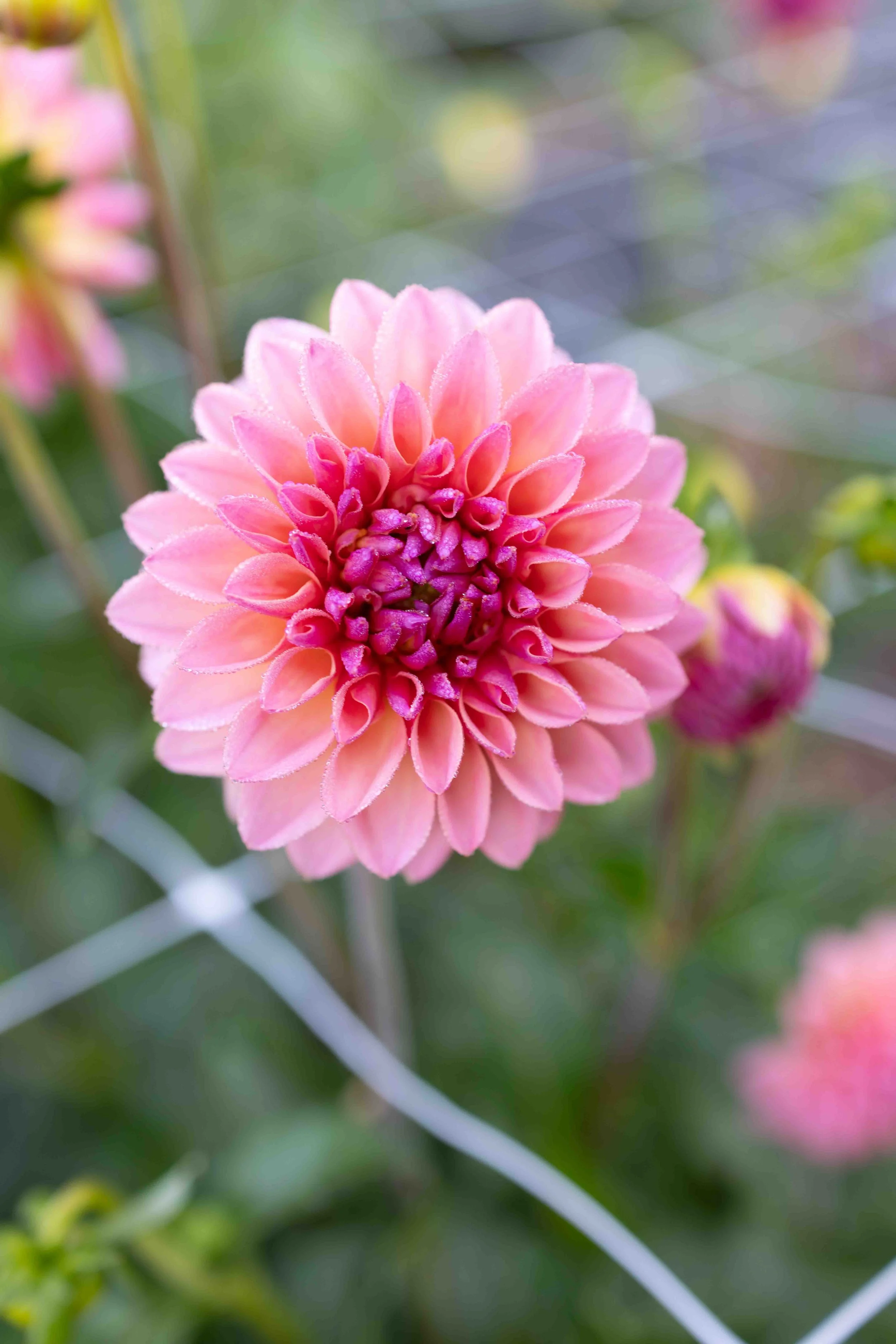
My most favorite dahlia, Doris Duke, doesn’t show up on any of the lists, below. While its color and form are pure perfection (to me), the plant tends to be small, generating few blooms and small tuber clumps each year, and it’s the most cold-sensitive of all the dahlias I grow — the only one that doesn’t tend to survive when we leave our dahlias in the ground for our Zone 7 winters.
haven’t decided where to sell your dahlias yet?
That’s exactly why I created the Revenue Streams Compass™ — to help you discover which ways of selling flowers align with your goals, so you can start growing the right dahlias from day one. Each tuber you plant this year can become a dozen more within a couple of seasons, which means the choices you make now will echo for years.
Farmers Markets, Subscriptions & Farmstands: Mid-Sized Dahlias for Mixed Bouquets
If your main outlet is farmers markets, bouquet subscriptions, or a farmstand, your bread and butter is mixed bouquets. Your dahlias need to be reliable team players — sturdy, mid-sized, and color-flexible enough to blend beautifully with your other crops.
Because dahlias share bloom timing with zinnias, celosia, and other summer-through-fall flowers, focusing on color harmony pays dividends. When your crops all speak the same color language, harvesting becomes faster, bouquet assembly becomes more efficient, and the end result looks more cohesive — all of which improve your bottom line.
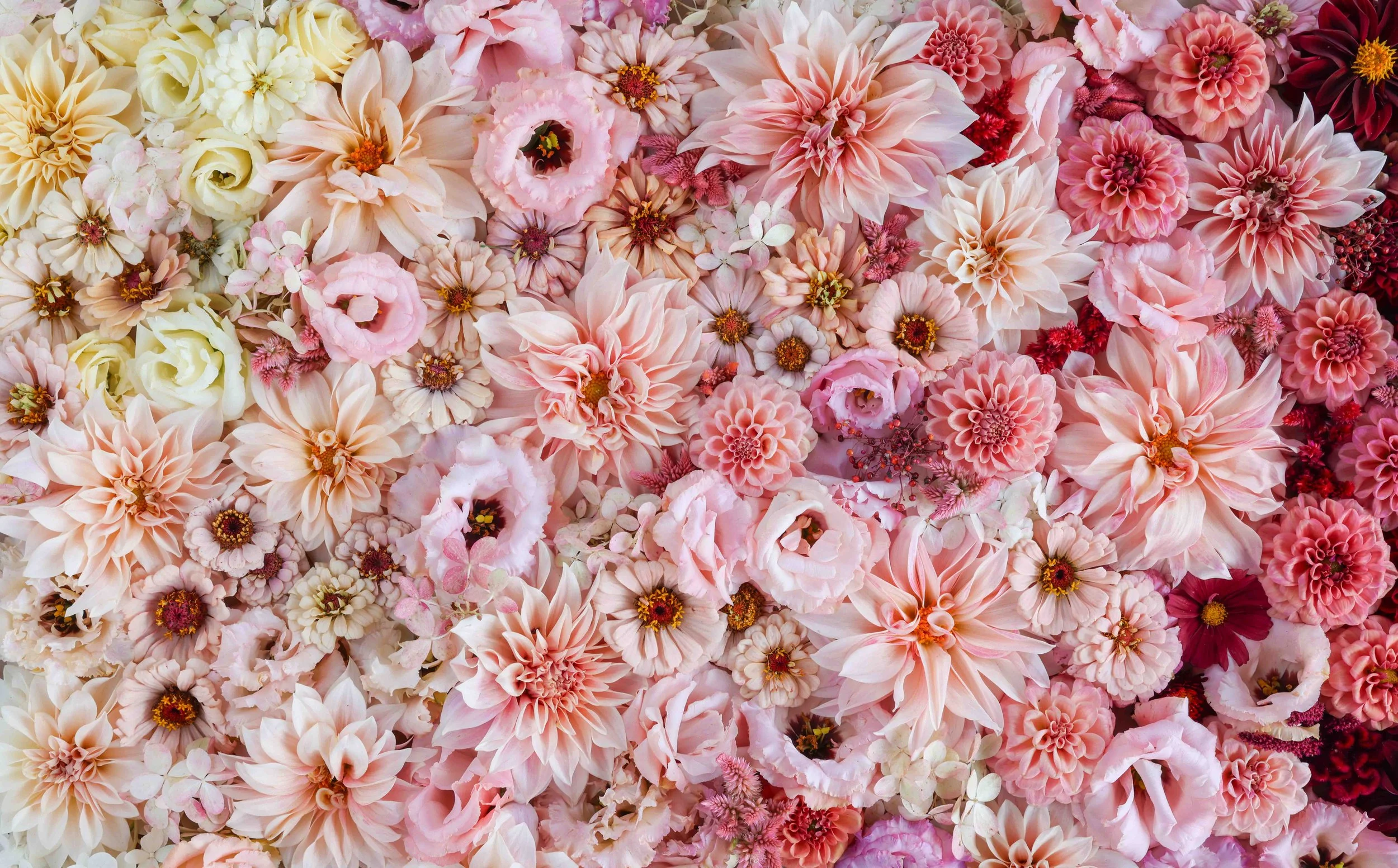
Zinnias, lisianthus, celosia, cosmos — consider the coloration of the other flowers that are blooming in fall as a helpful guide to choosing dahlia varieties.
Key Criteria for Dahlias in Mixed Bouquets (for Markets, Subscriptions, etc.):
Mid-sized blooms — Skip the dinner plates (too large for mixed bouquets) and the minis (too small to justify the labor). Dinner plates shine in showcase arrangements; pompoms belong in design work. Mid-sized blooms are the workhorses of mixed bouquets.
Longevity — Market customers value beauty, but they remember vase life. While dahlias aren’t the longest-lasting cut flowers, some varieties outperform others. The ones listed below hold their own for several days in a bouquet.
Long, strong stems — Ideal bouquet dahlias need enough stem length to anchor a mixed bunch and give designers flexibility in arranging height and shape. Look for varieties that produce stems long enough for at least 16" bouquet builds without constant pruning or discarded side blooms.
Durability — Market dahlias endure more handling than any other category. They’re bundled, sleeved, transported to market, displayed, sold, and then travel home with customers. Ball and small decorative types are the heroes here — their tight petals resist bruising, and their rounded forms nestle among zinnias, celosia, and cosmos without damage.
The Bouquet Blueprint™ framework guides every market bouquet we make, and within it, market dahlias fill two key roles:
Focal Flowers — Slightly larger, showier blooms that draw the eye and create the bouquet’s visual center.
Foundation Flowers — Steady, mid-sized blooms that connect and support the design, bridging color and form.
If you’re making mixed bouquets for markets or subscriptions, plant enough dahlias to cover both roles. This lets you pair them seamlessly with other summer and fall focal flowers (like large zinnias and sunflowers) and foundation companions (such as lisianthus, medium-sized zinnias, and celosia). The result? Maximum palette flexibility and a more consistent, balanced bouquet line-up week after week.
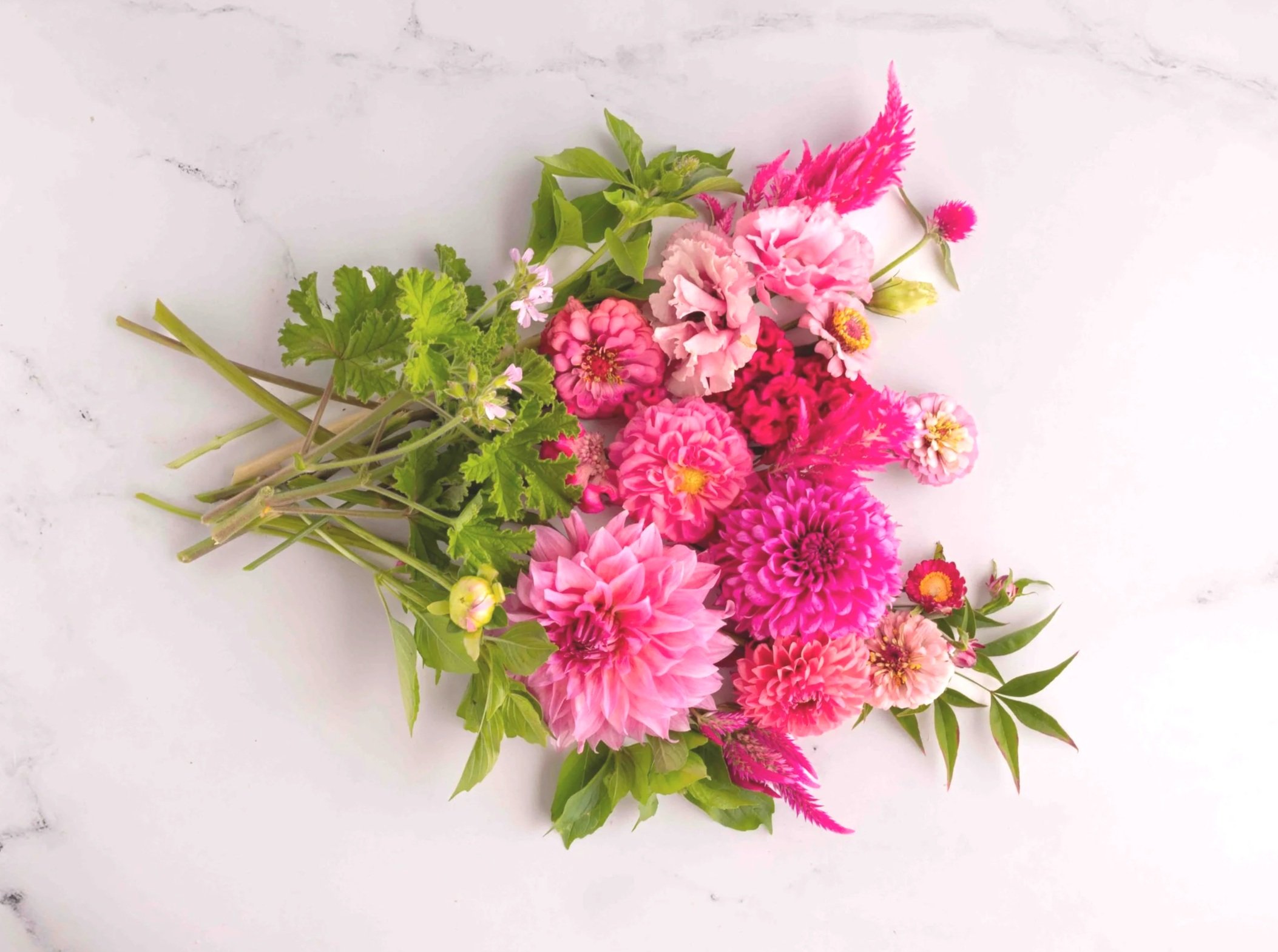
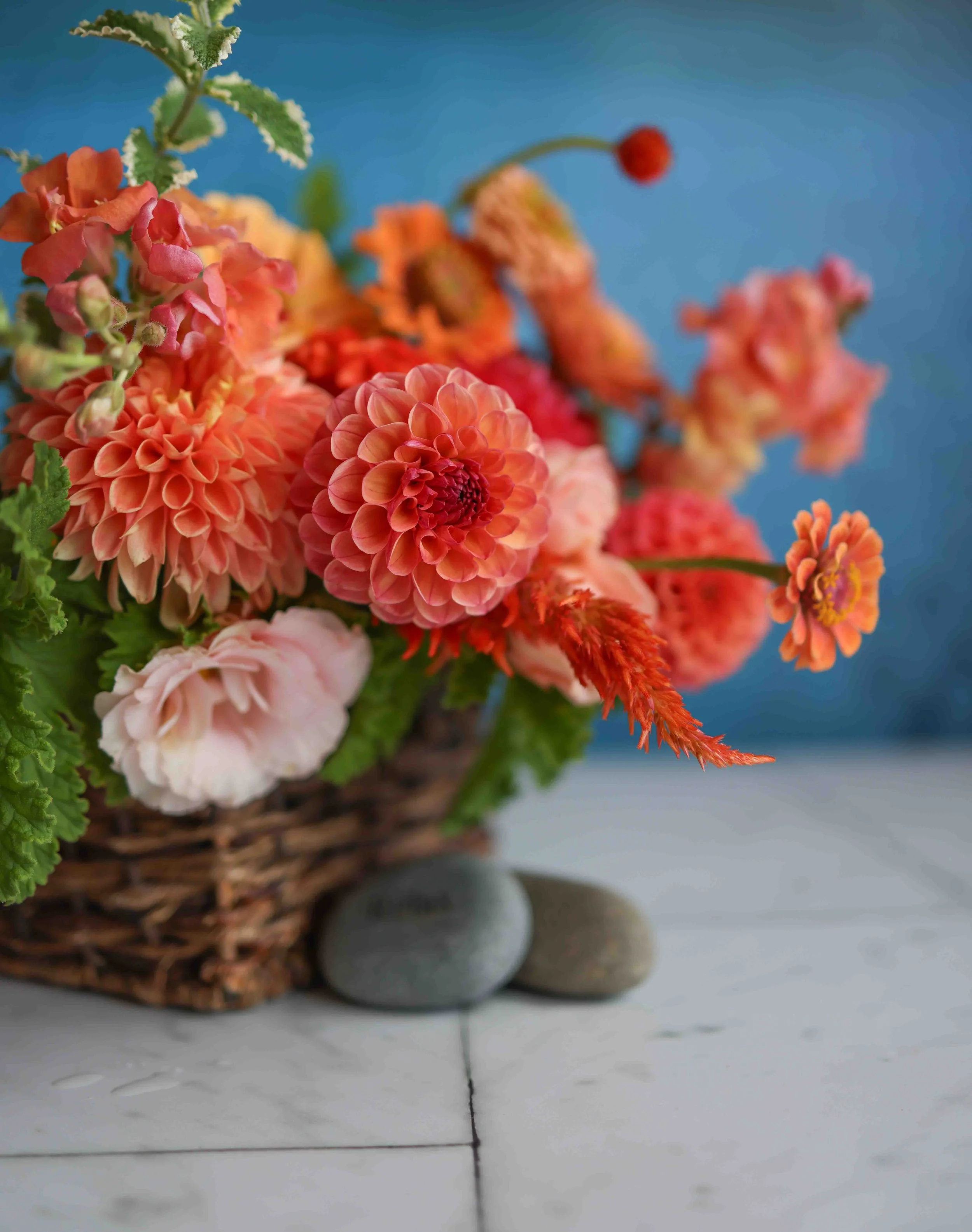
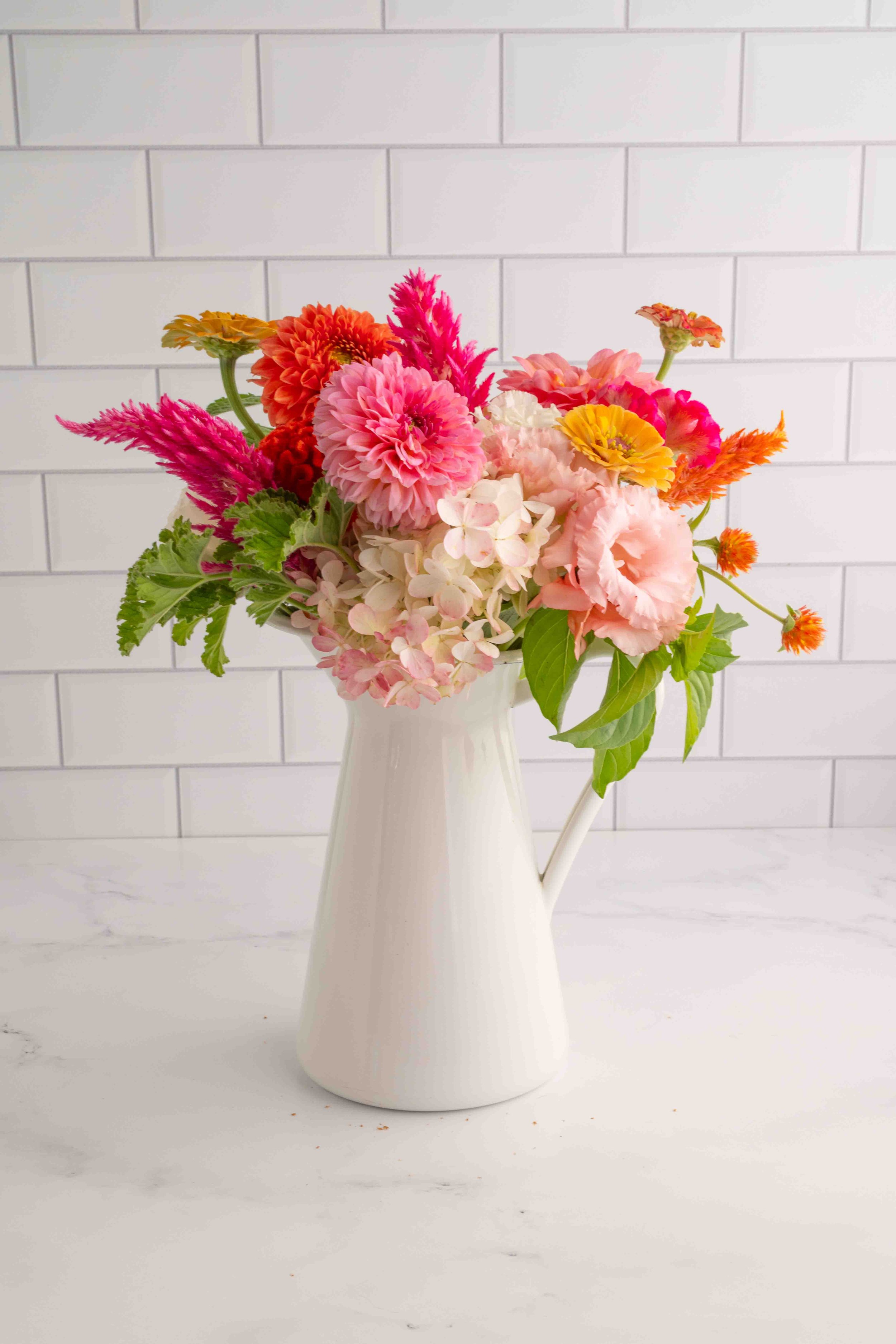
In the bouquets above, dahlias are used as both Focals and Foundations. The difference in size is sometimes quite obvious, as with the very large “Wyn’s Pink Pearl” dahlia in the first picture, and sometimes more subtle, as with the large “Linda’s Baby” dahlia and the smaller “Robin Hood” dahlias in the middle picture.
Weddings & Events: Big, Bold and Beautiful Dahlia Blooms
When it comes to weddings and event work, dahlias are unmatched for their presence and romance. They fill every role — from the stars of bridal bouquets to the anchors of centerpieces and statement installations.
Here, durability and vase life take a back seat to photogenicity, color precision, and drama. In this sales stream, your flowers don’t have to last a week — they just need to look spectacular for a single day (and in the photos that will live on forever)
Because dahlias peak in late summer and fall, wedding palettes often lean into the warmth of the season. Think blush and burgundy, peach and rust, or cream and caramel — but don’t overlook rich purples, soft lavenders, or moody mauves that designers crave for distinctive color stories.
And while “white” isn’t technically a color, it’s an essential category for this stream — a must-have if you’re working with event florists or brides.
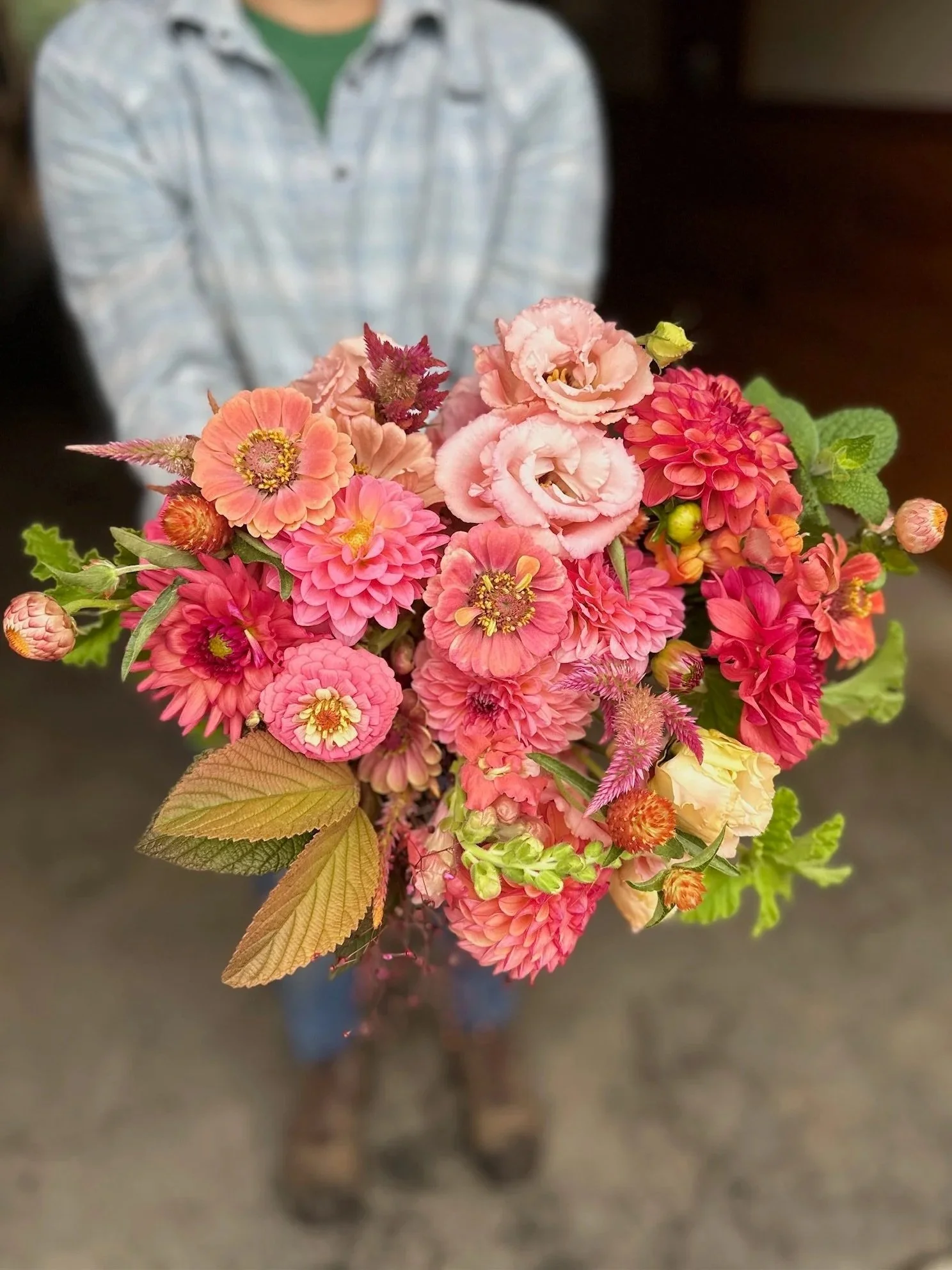
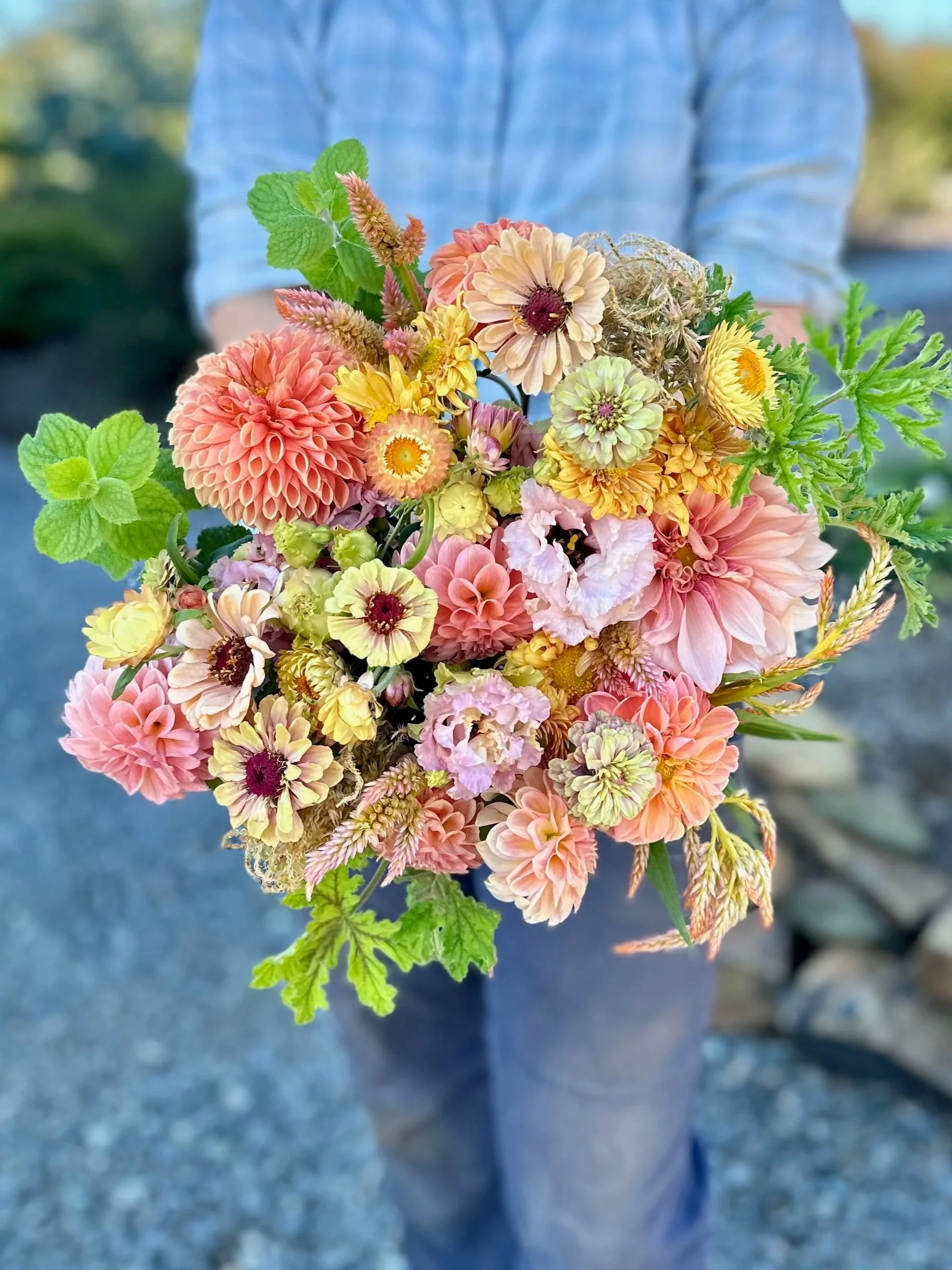
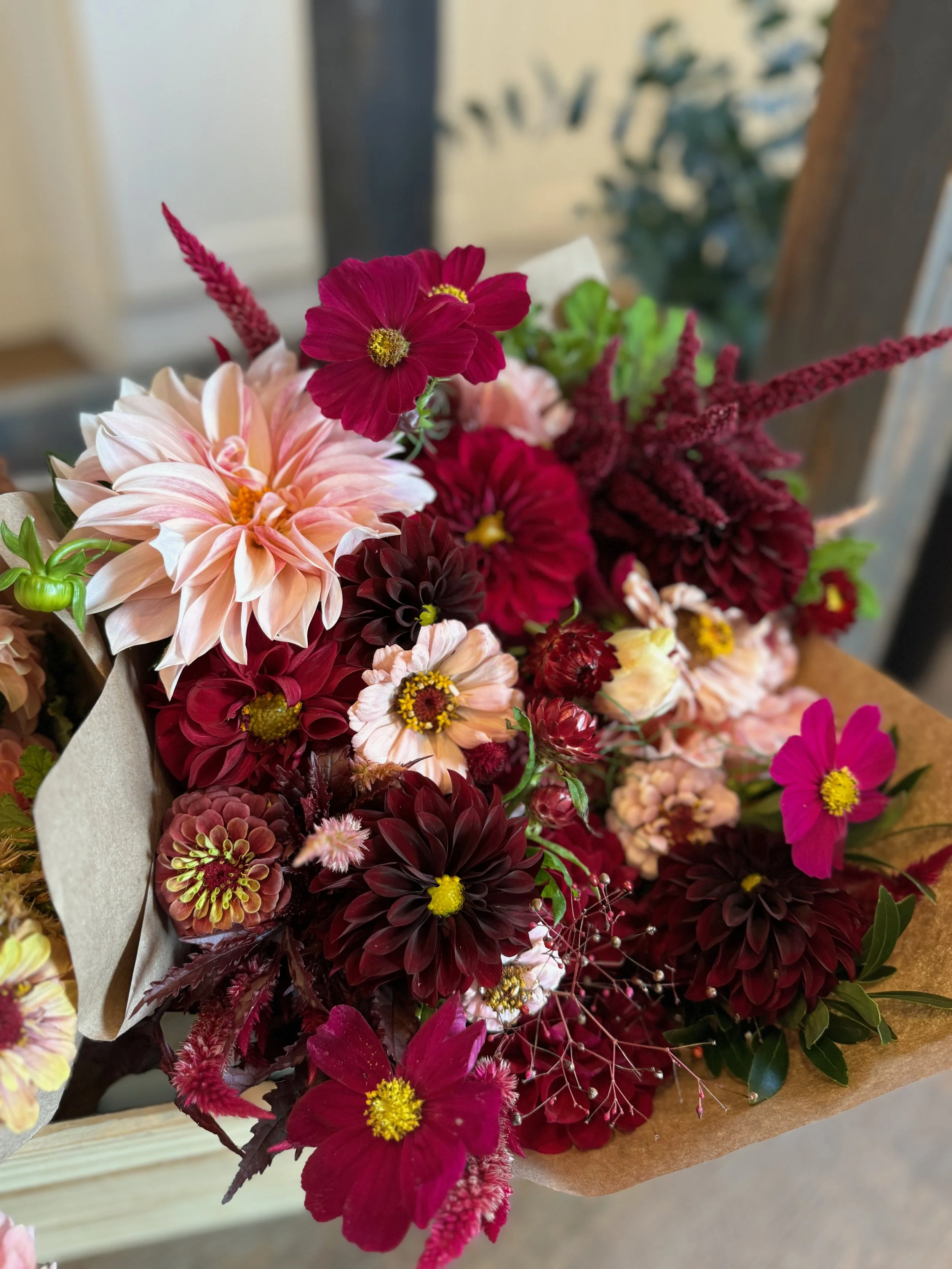
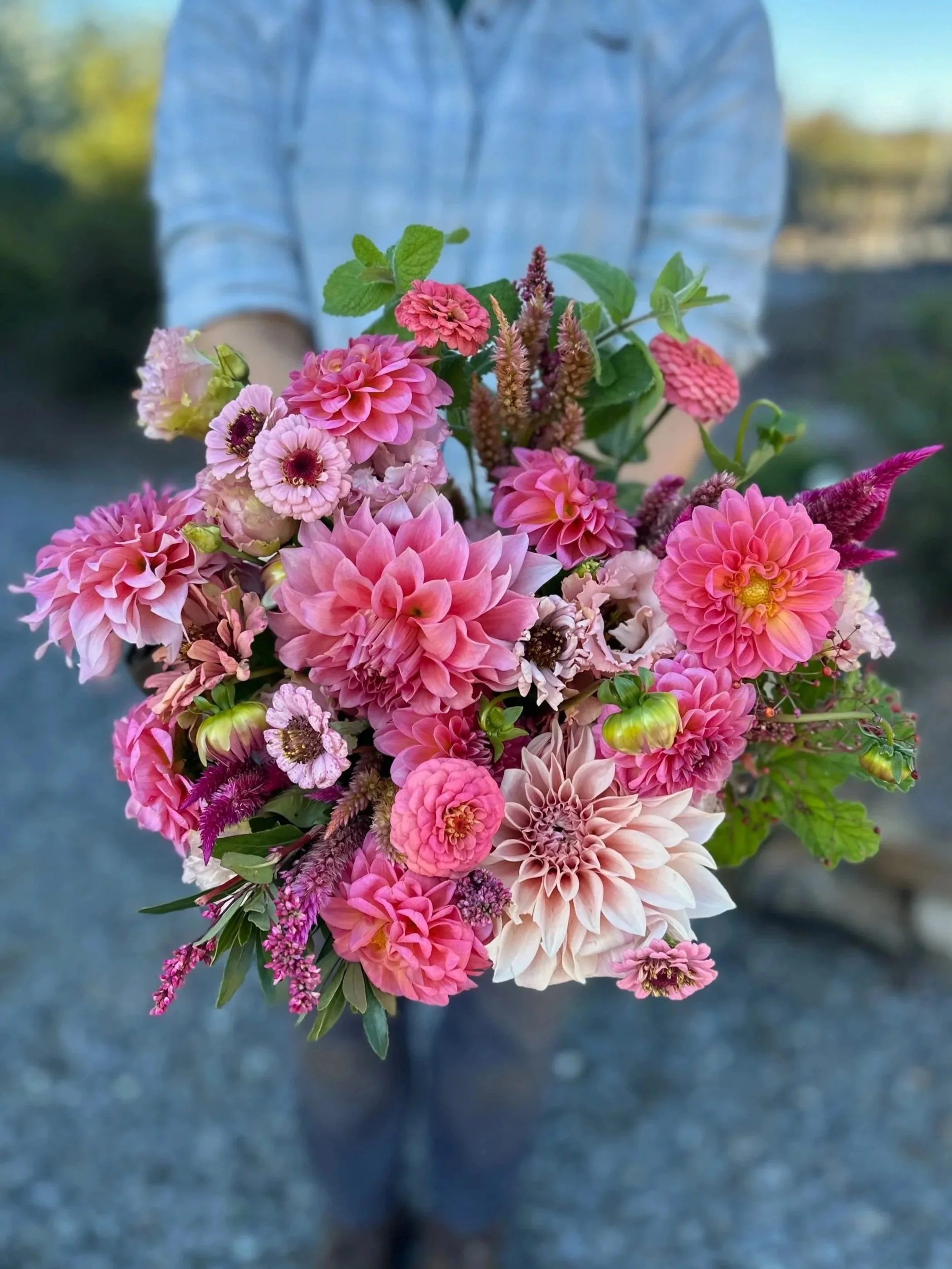
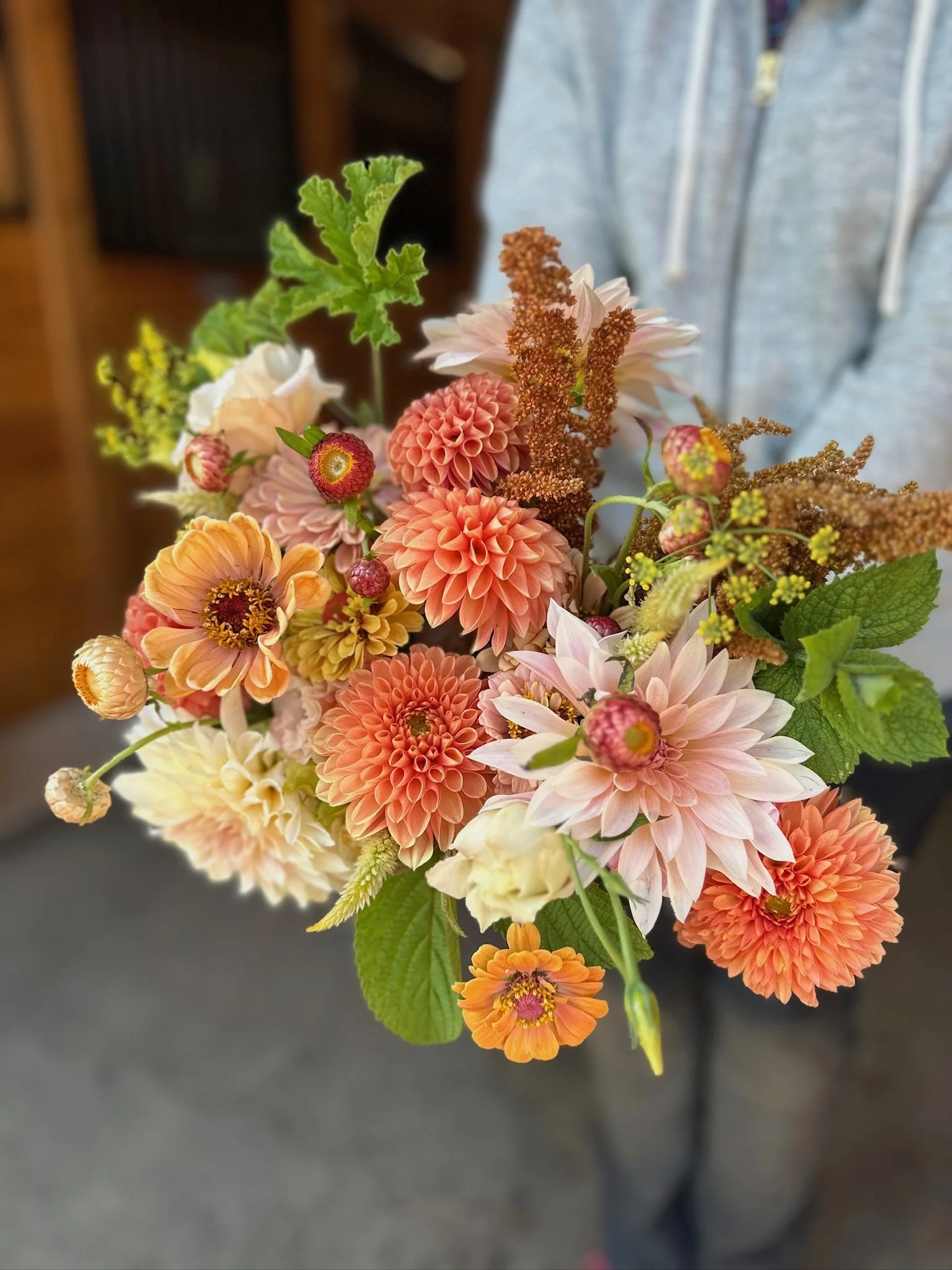
Muted, bright, dark, pastel — the color palettes of fall are endless. Since, for most of us, we can’t plant everything, the key is to grow varieties that are versatile enough fit into multiple color palettes.
Key Criteria for Dahlias in Wedding & Event Work:
All wedding dahlias share certain essentials:
Photogenic first — Clean petal structure and consistent color are non-negotiable. What photographs beautifully sells beautifully next season.
Stem length flexibility — Shorter stems are welcome; centerpiece and compote work often call for trimmed lengths, while larger stems support arches and installations.
Longevity is secondary — A bloom that’s flawless for one day is just fine.
Color cohesion counts — Designers buy palettes, not single hues. Grow for “romantic blush,” “moody fall,” or “sorbet shades,” rather than chasing every trending variety.
Balance across bloom sizes — You’ll need large-scale blooms for drama, medium-sized ones for structure, and a few petite types for finishing detail.
Within that, think of your crop in three design roles (again, these come from the Bouquet Blueprint™ framework, which you can learn more about here):
Focal Flowers — Large, eye-catching blooms for bouquets, centerpieces, statement arrangements and installations. Dinner-plate varieties are extremely useful in statement arrangements and installations, where smaller blooms get lost and volume is a huge asset.
Foundation Flowers — The workhorses of any design: medium-sized dahlias that provide structure and dependable color anchors.
Floater Flowers — Petite forms that add movement and fine detail. Minis and pom types earn their keep here; they’re magical, and wedding pricing justifies the space they take in the row.
A Note About A La Carte & DIY Wedding Sales Channels:
Á la carte and DIY weddings use many of the same dahlia varieties as full-service events but in smaller quantities—and with fewer large-scale designs. Because these couples aren’t ordering installations or arbors, dinner-plate dahlias are used far less often.
Bouquets, personal flowers, and centerpieces make up most of their needs, so mid-sized dahlias like Sweet Nathalie, Rose Toscano, Rock Run Ashley, and Linda’s Baby take center stage. The only time a large dinner plate-sized bloom might appear is in a statement centerpiece, where one or two oversized blooms create luxury without requiring a full-scale install.
For most DIY and a la carte work, mid- to large-sized dahlias are the heroes: easy to arrange, photogenic, and just big enough to feel special.
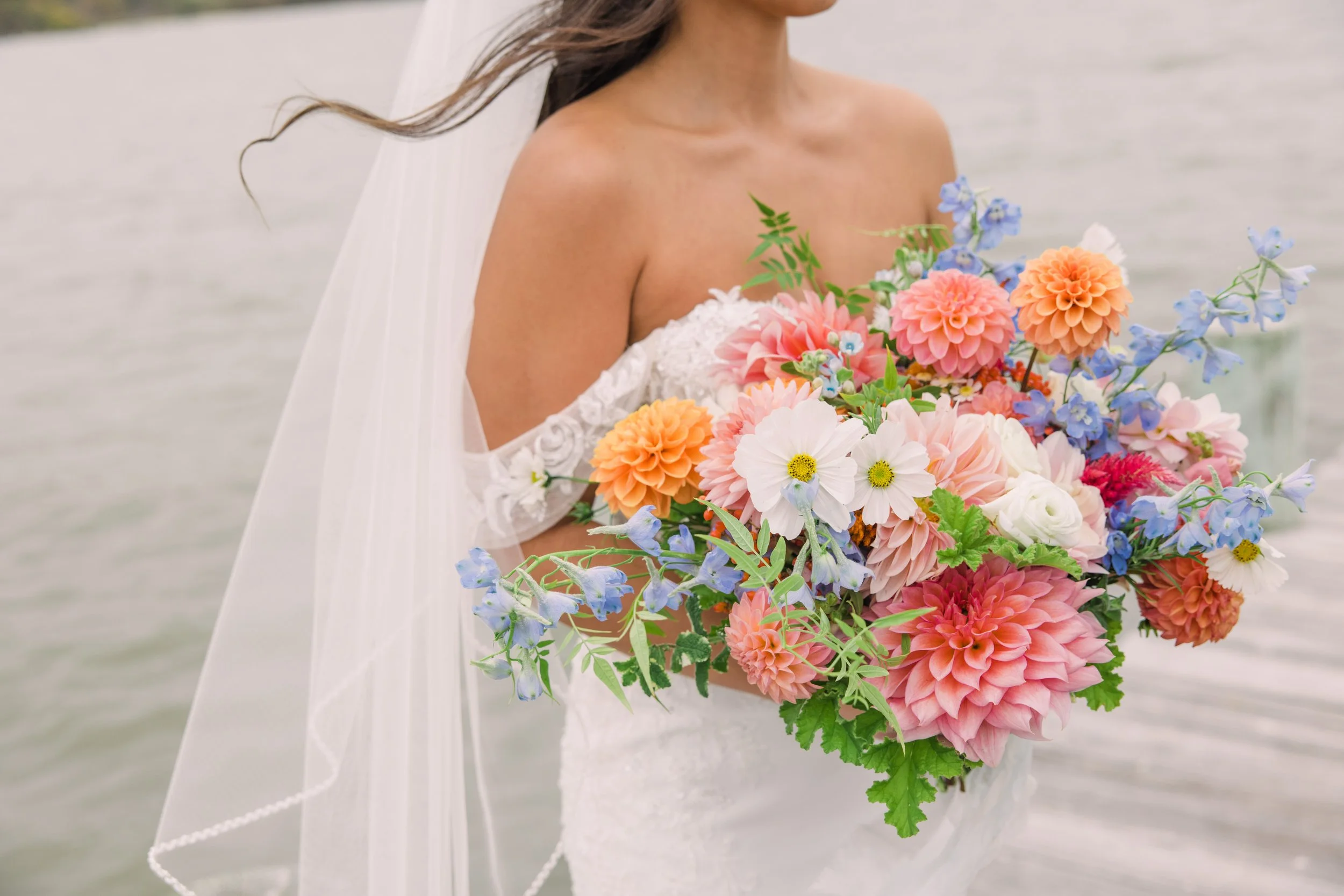
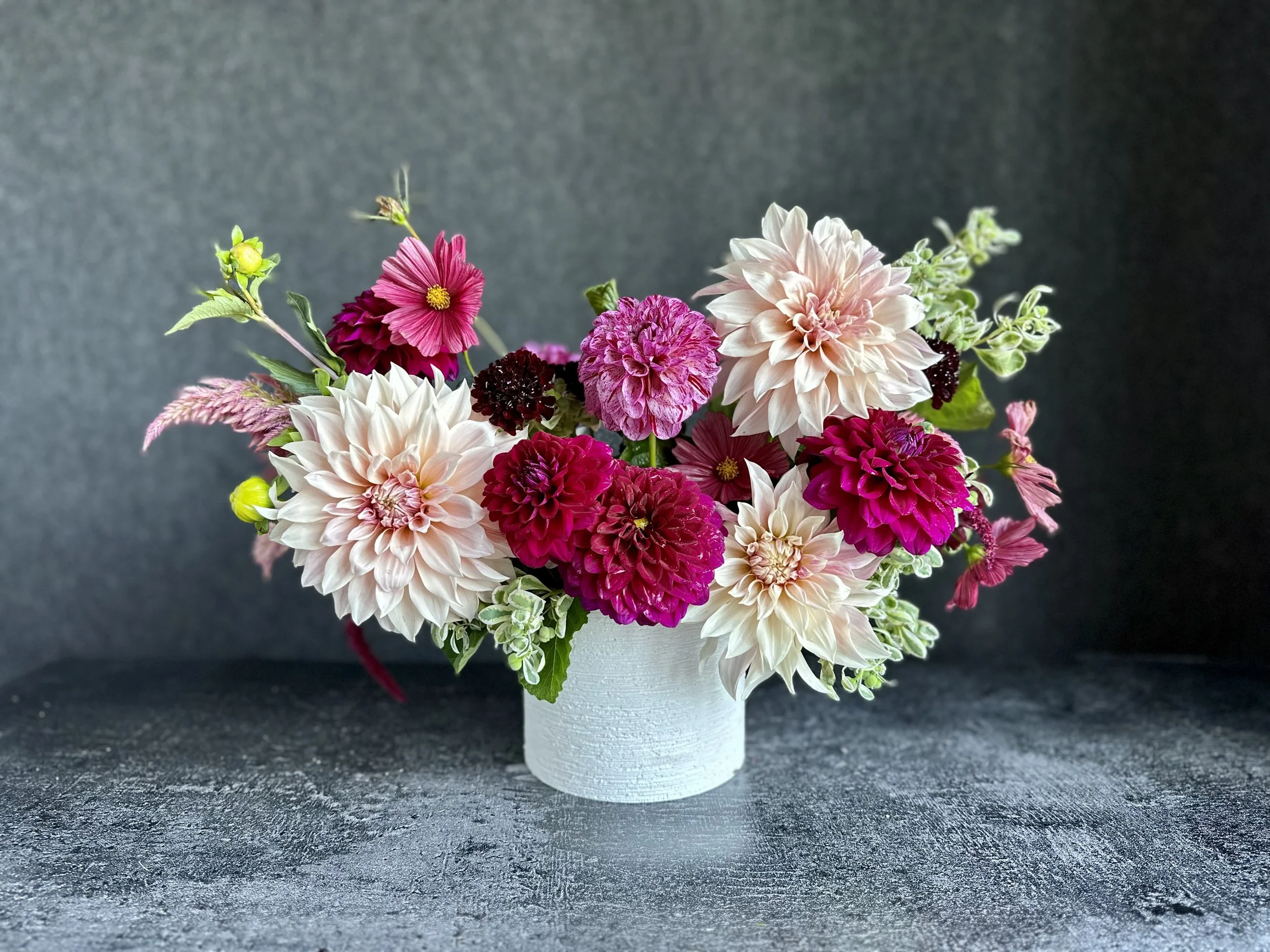
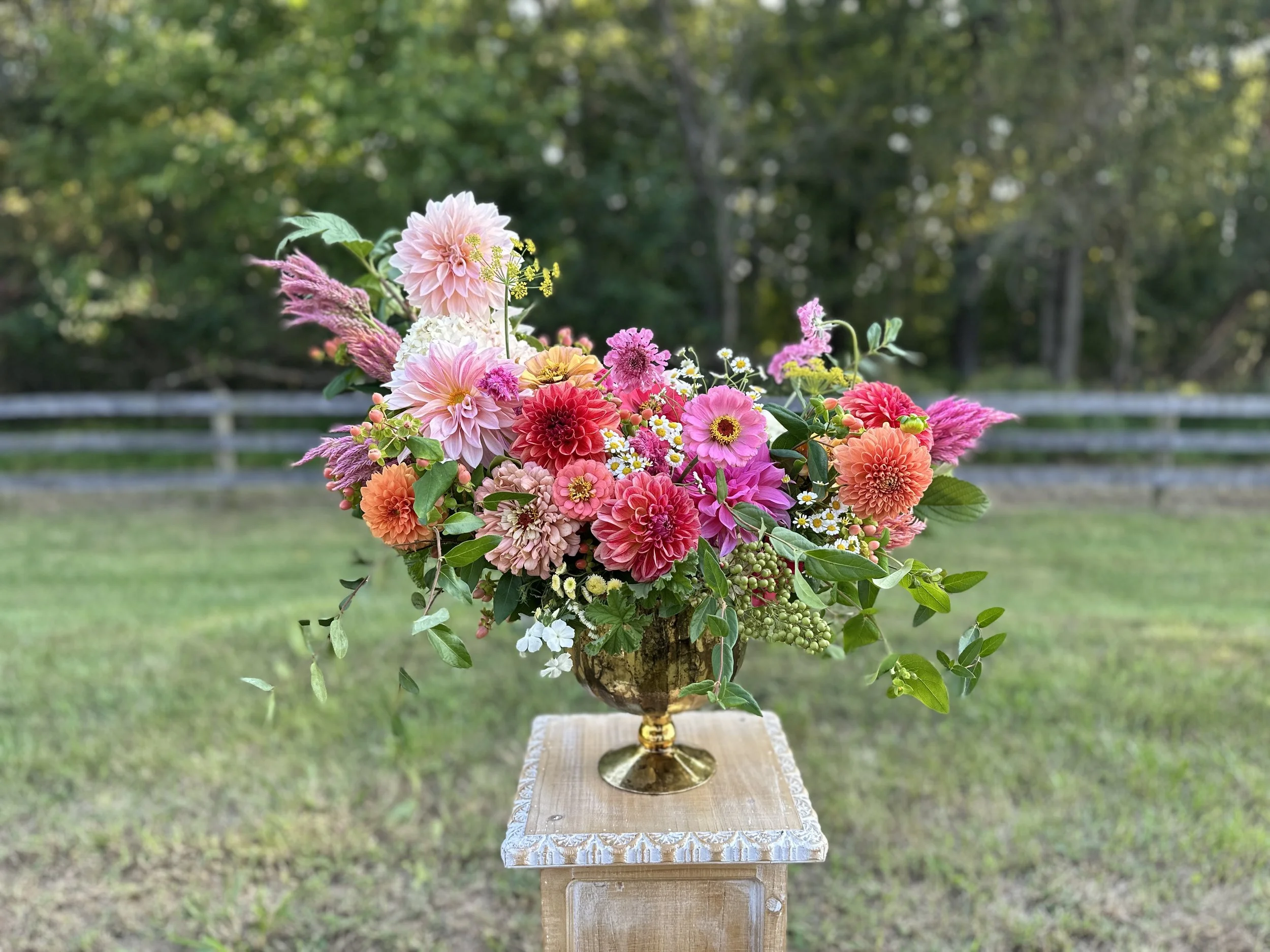
Large dahlias have an important role in wedding florals, where they take center stage in bridal bouquets, centerpieces, and statement arrangements. The very largest dahlias — true dinner plate-sized ones, are extremely helpful when you need maximum volume for an in installation, such as an arbor (not pictured).
Pick-Your-Own: Picture-Perfect, Not Production-Perfect
At pick-your-own events, personal taste rules. Guests cut what catches their eye — and the stems that get left behind reveal just as much about perceived value as they do about beauty. The goal of a PYO isn’t just to sell a few spectacular flowers; it’s to keep visitors engaged and cutting steadily throughout the season. High stem turnover equals happy guests and less deadheading for you.
Because customers are often charged by the stem, size and showiness drive perceived value. Large, dramatic blooms feel like “a better deal,” while smaller or subtler varieties are often passed over. The challenge for the grower is to balance these irresistible showstoppers with productive, mid-sized workhorses that keep the field looking full and the buckets stocked for late-day visitors.
Key Criteria for Pick-Your-Own Dahlias
Visual impact is everything. Guests cut with their eyes first. Large, dramatic blooms like Café au Lait Royale or Spartacus stop people in their tracks.
Balance showstoppers with producers. Dinner-plate types may draw the crowd, but they yield fewer blooms. Pair them with prolific mid-sized varieties to ensure steady supply.
Novelty sells. Unique colors — like Crème de Cassis with its silver-to-burgundy ombré petals — make guests feel like they’ve found something special.
Stem abundance matters. Visitors prefer to fill their buckets easily. High-yielding varieties keep both early birds and late-arrivers satisfied.
Perceived value trumps perfection. Slightly imperfect blooms still delight, as they still keep the field looking lush and abundant even if they don’t get harvested.
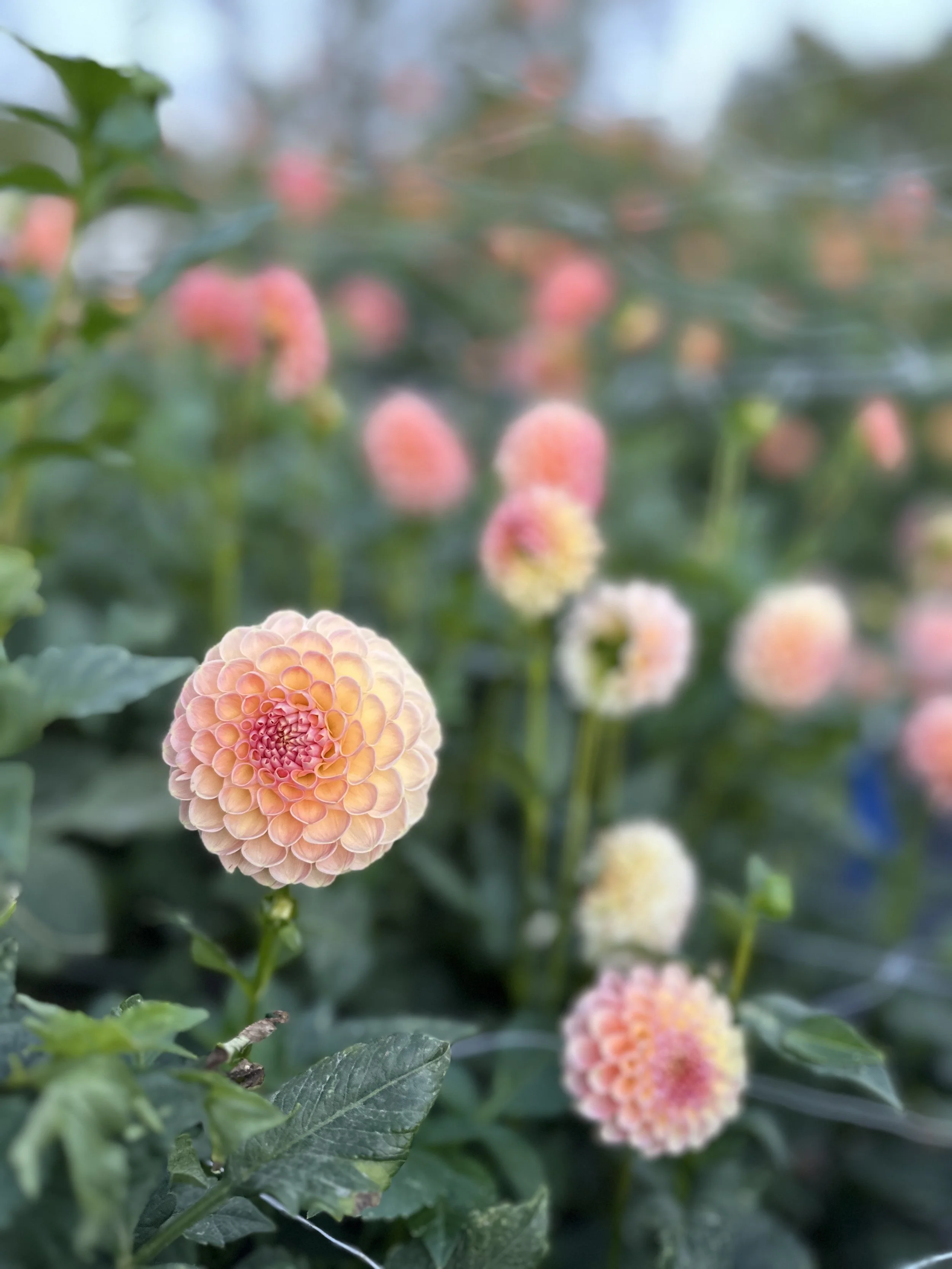
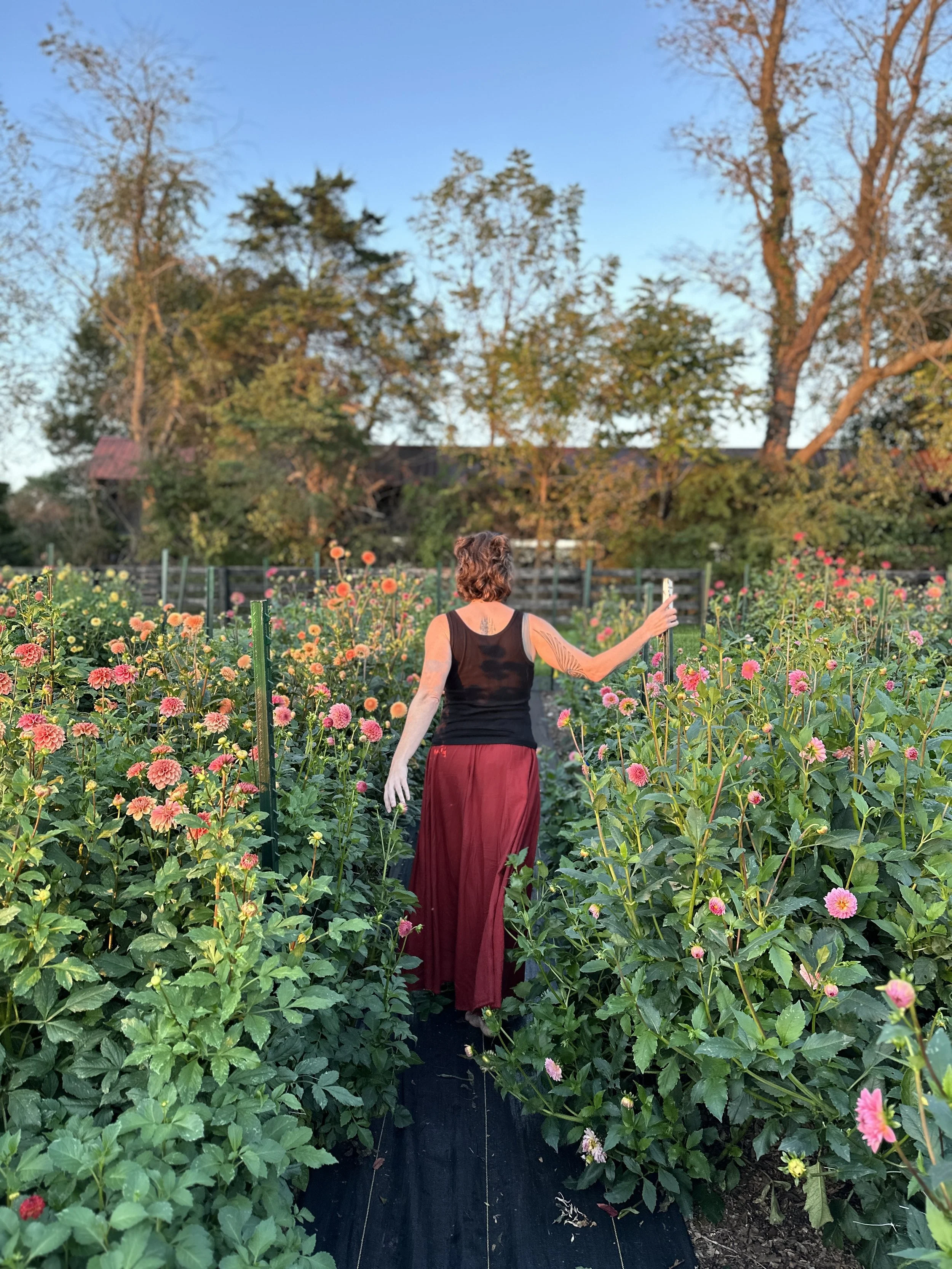
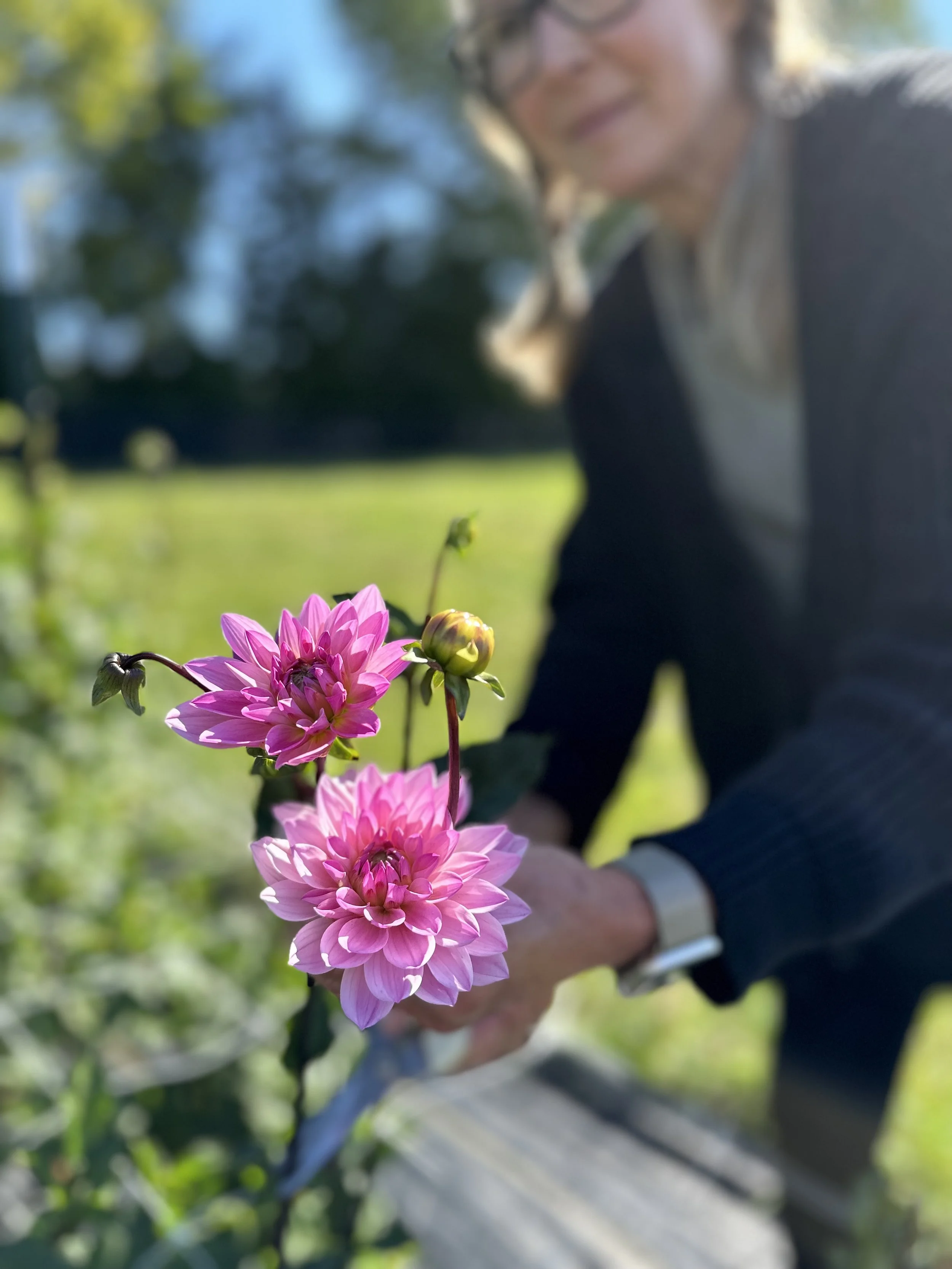
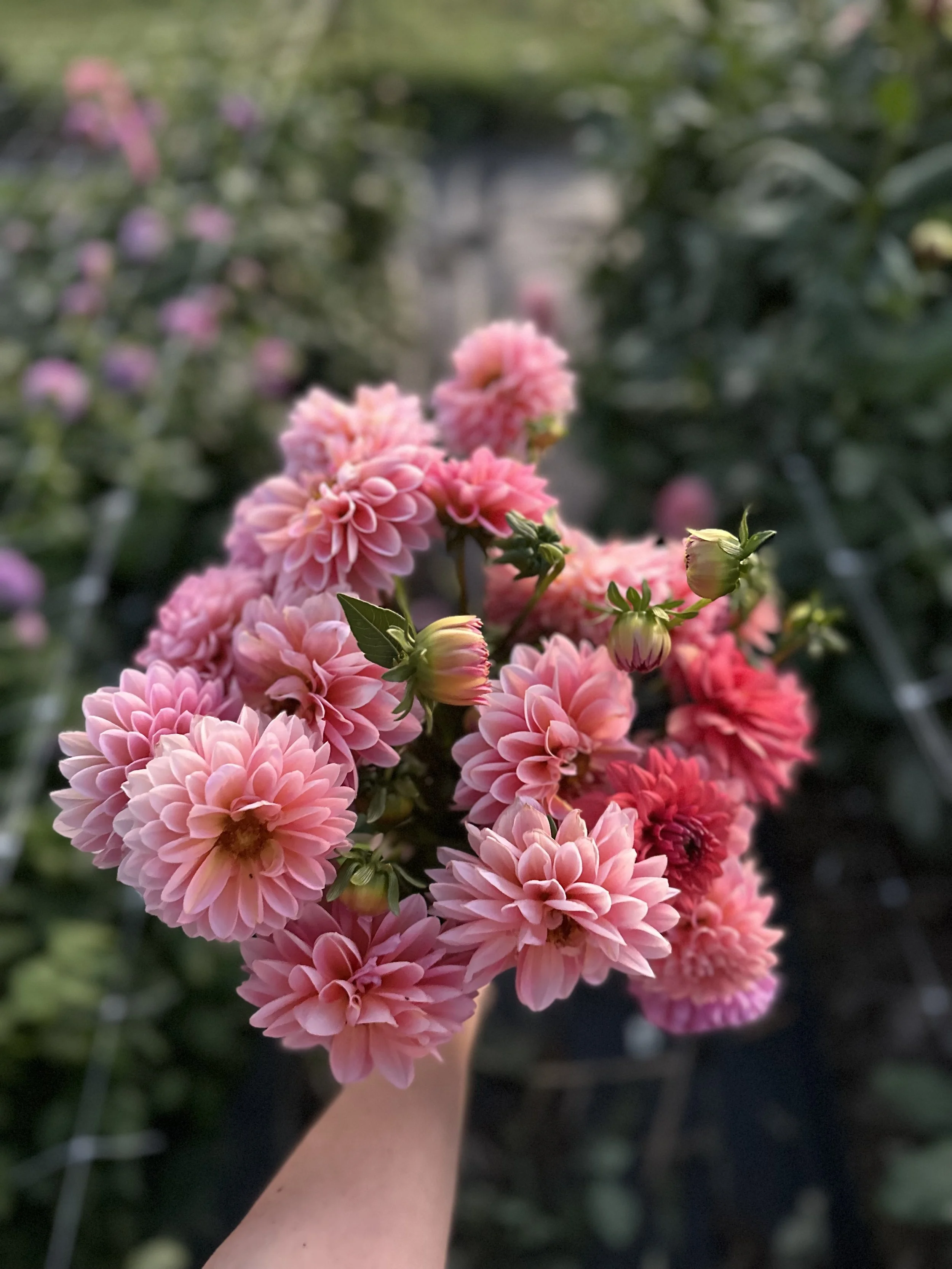
Pick-your-own customers’ tastes are extremely varied, so having a wide variety of dahlia types and colors is ideal.
Wholesale: Match Your Dahlias to Your Buyer
Wholesale is the one sales channel where the “right dahlias” depend almost entirely on who you’re selling to—not the fact that it’s wholesale.
Unlike farmers markets, weddings, or pick-your-own, wholesale isn’t a single type of customer. It’s a container that can include multiple buyer groups, each with different needs, timelines, and design priorities:
Wedding & Event Florists
These designers shop wholesale for the same reasons you’d grow for weddings: color precision, consistency, and show-stopping blooms. They want large focal dahlias, refined color palettes, and mediums that photograph beautifully. Their needs mirror the “Weddings & Events” category almost exactly.
Retail Florists
Retail florists behave much like the bouquet-building farmer or designer. They need mid-sized, durable, color-flexible dahlias that fit mixed arrangements and add value without dominating the design. Their needs align tightly with your “Farmers Markets, Subscriptions & Farmstands” section—reliability, longevity, and mid-sized stems that play well with others.
Florist Collectives, Co-ops, and Wholesale Hubs
If you're selling into a collective, your product mix will depend on who shops there. Some hubs serve mostly wedding florists; others supply daily retail shops. Many do both. In these settings, variety selection becomes a balancing act—grow for the dominant buyer, but keep some range so you aren’t over-producing varieties only one customer type wants.
Because of this variability, wholesale doesn’t get its own distinct dahlia list. Instead, it borrows from the lists above—depending on the designer you're growing for.
A Note About Dahlia Variability (and Why Your Blooms Might Look Different)
If you’ve ever ordered a dahlia and thought, “This can’t possibly be the same variety I saw online,” you’re not alone. Dahlias are famously responsive to their environment — soil composition, temperature, and light intensity all affect pigment expression and bloom form.
Warmer climates tend to push petals toward coral, peach, or yellow tones, while cooler nights deepen purples, burgundies, and reds. Even soil pH and fertility can subtly shift color, making the same variety look noticeably different from one farm to another.
Photography adds another layer of variability. Differences in lighting, editing, and even how computer screens render color can dramatically alter what you see online. Two growers can both be right about how a variety “really” looks — they’re simply seeing the same flower through different lenses.
For example, I’ve seen photos of Linda’s Baby that make her appear soft peach, yet in my fields she’s a warm, clear pink — cheerful and bright, but decidedly pink.
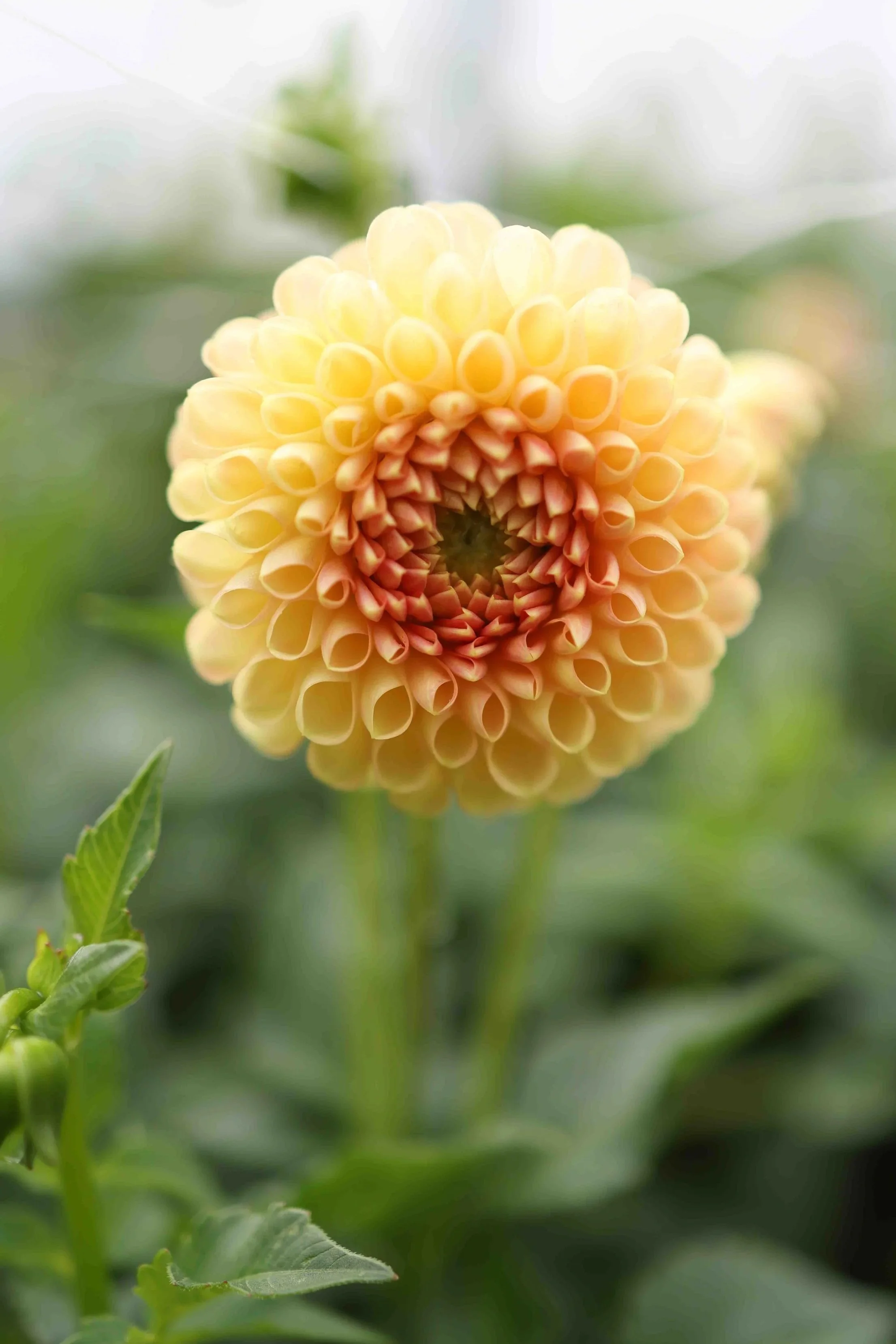
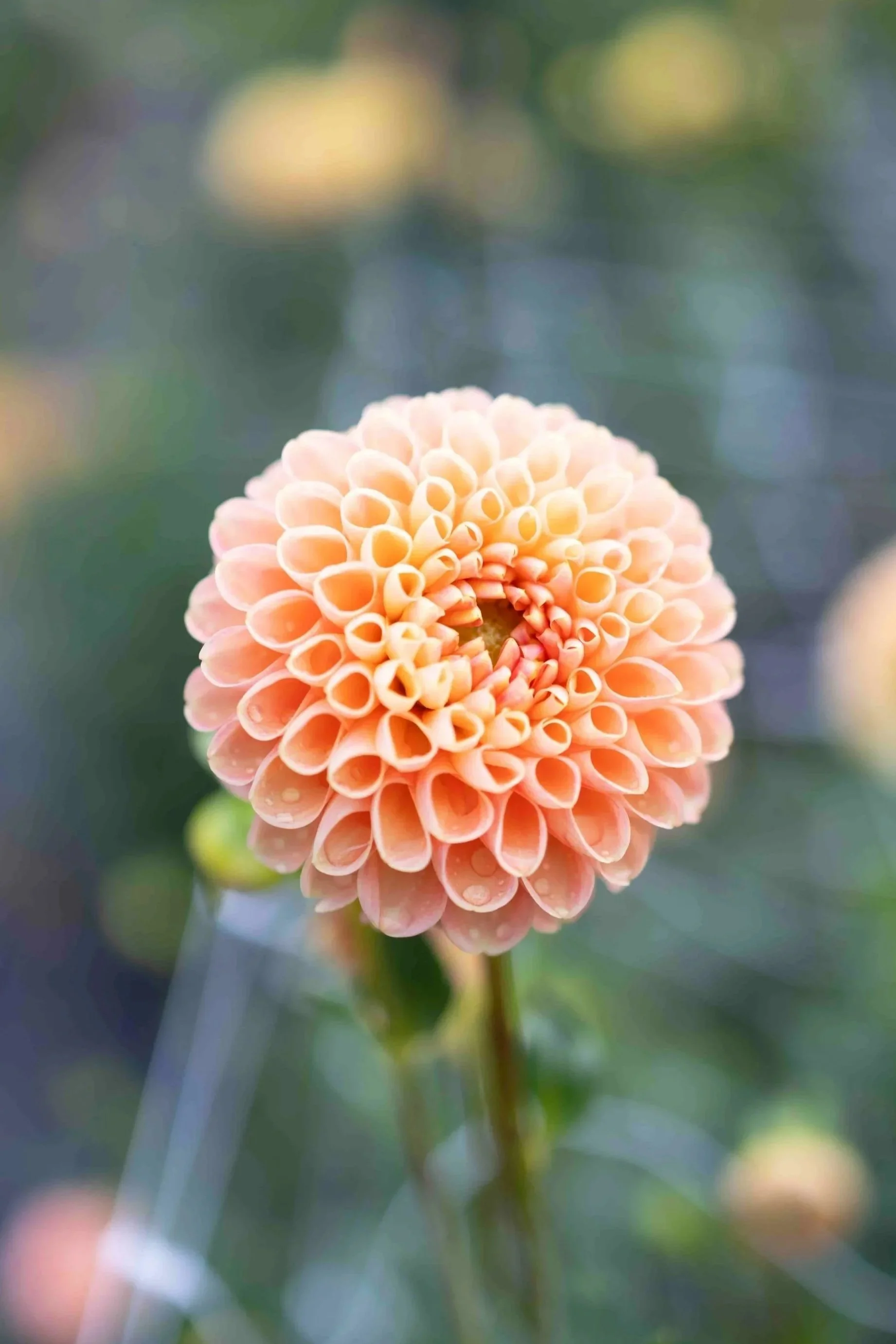
These are both photos of “Chrichton Honey,” though you’d never know it based on the coloration. It can be predominantly yellow, or shades of peach, depending on the time of year, your growing conditions, and even plant-to-plant variation.
💬 Your Turn: What’s Working for You?
The varieties here are simply the ones I’ve grown, loved, and learned from so far. There are countless others that deserve space in a flower farmer’s field—I just haven’t tried them yet, though here’s what’s on my test bench (because every season is an experiment).
Salmon Runner: I’m trying to find a larger dahlia with a warm, dark pink tone that works with Iced Tea and other warm-hued varieties.
Karma Naomi: I want to confirm that this is the burgundy that I have already — it lost its label years ago…
Ginger Willo: The goal is to have a mini pom with yellow/orange/rust coloring that I can use for fall events.
If you’ve found a variety that fills a niche beautifully—or one that surprised you with its performance—I’d love to hear about it. Leave a comment or send me a DM on Instagram @sweetpiedmont so we can keep building a field-tested list of market, wedding, and PYO standouts together.

Dahlias to Grow By Sales Channel
A FREEBIE - Grow dahlias that makes sense for your sales channels - a reference guide organized by bloom size, color, appeal, and utility.

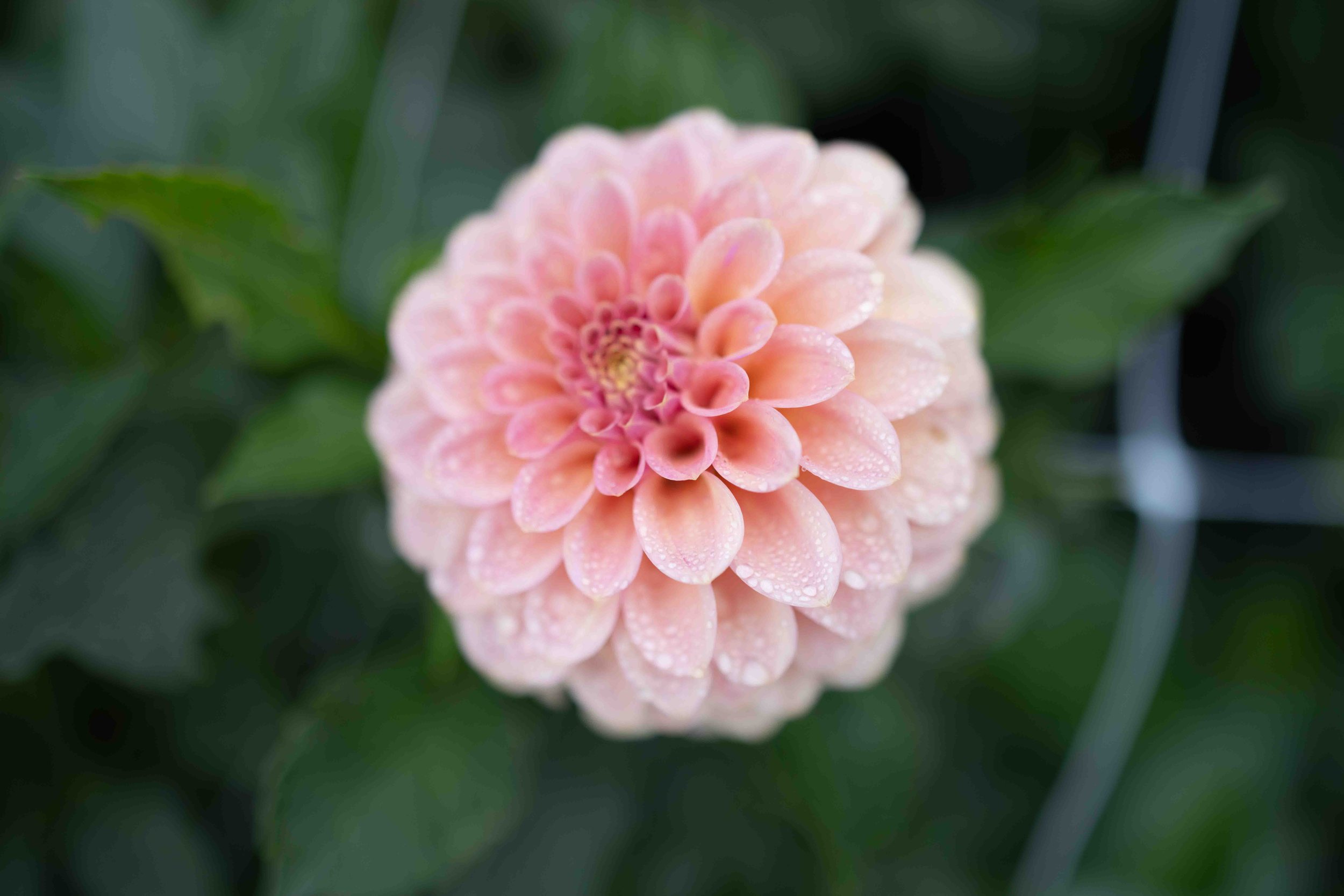
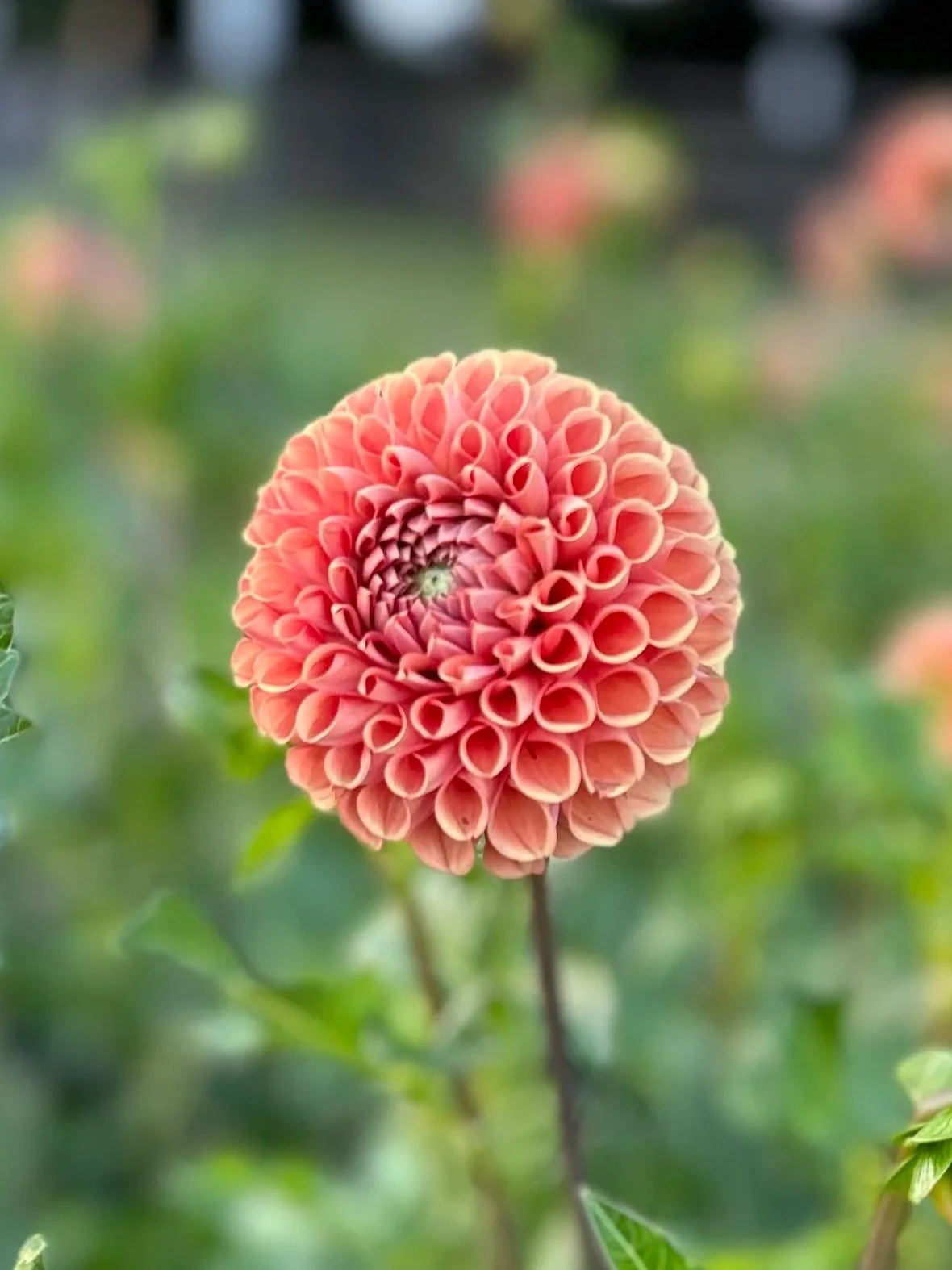
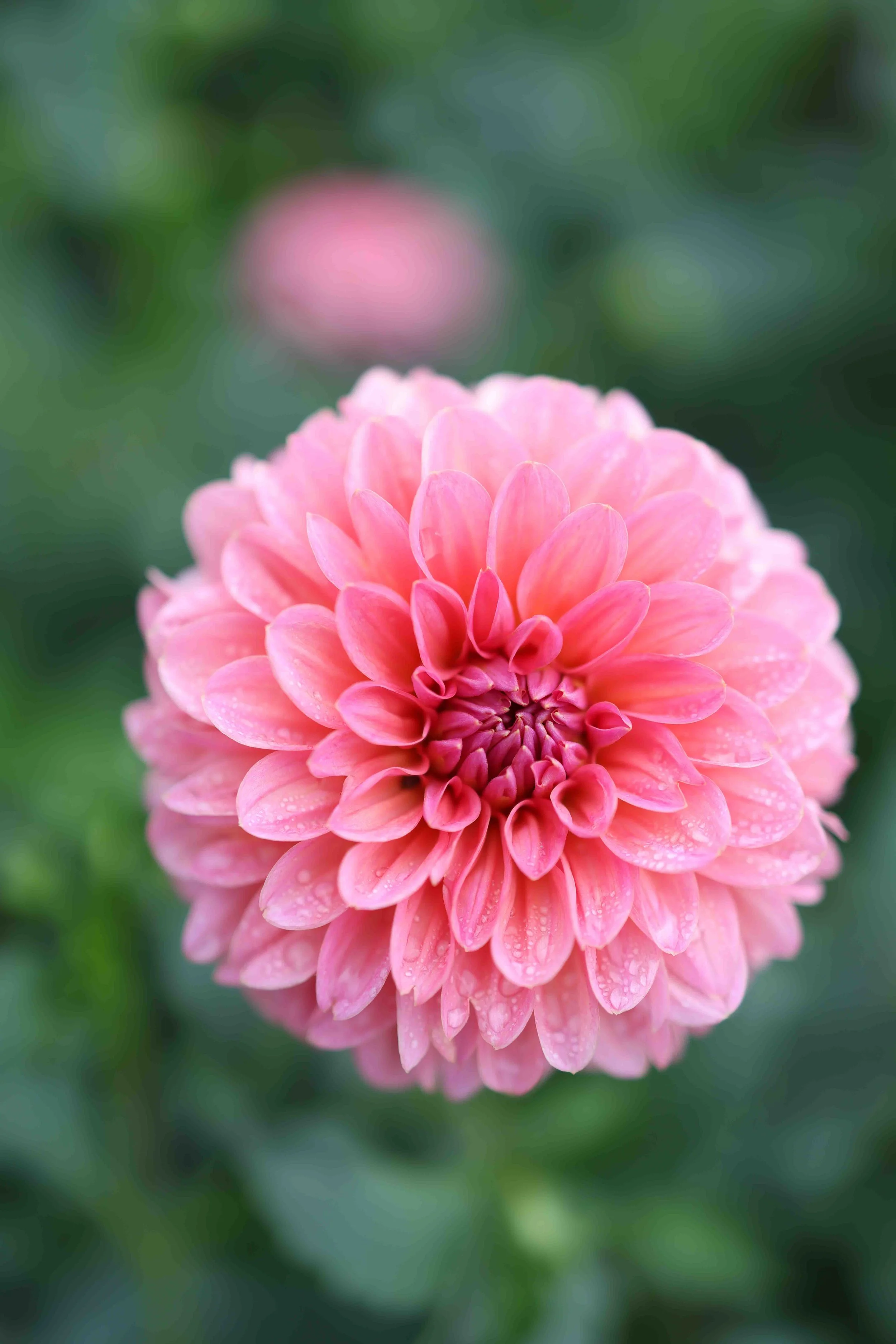
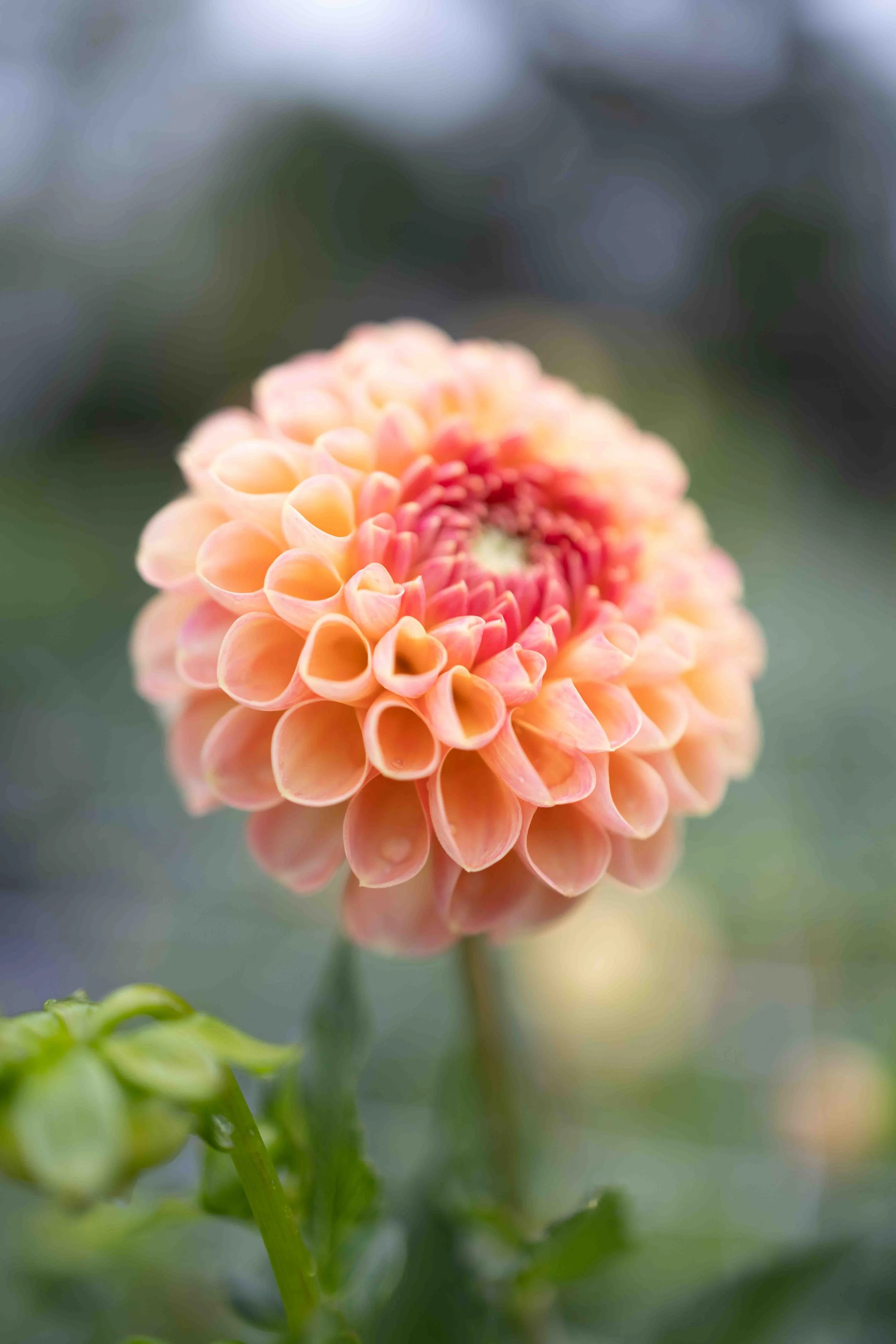
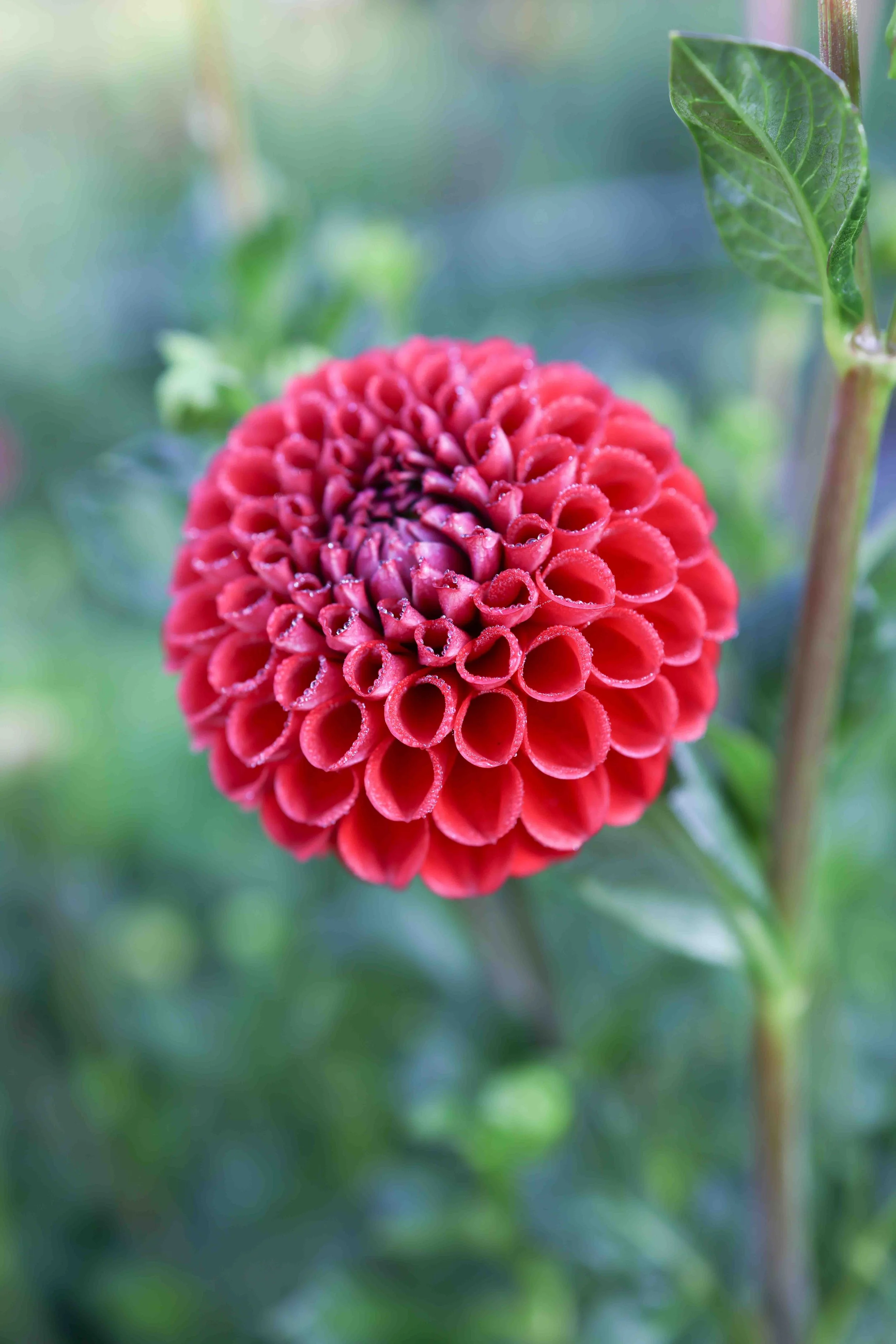
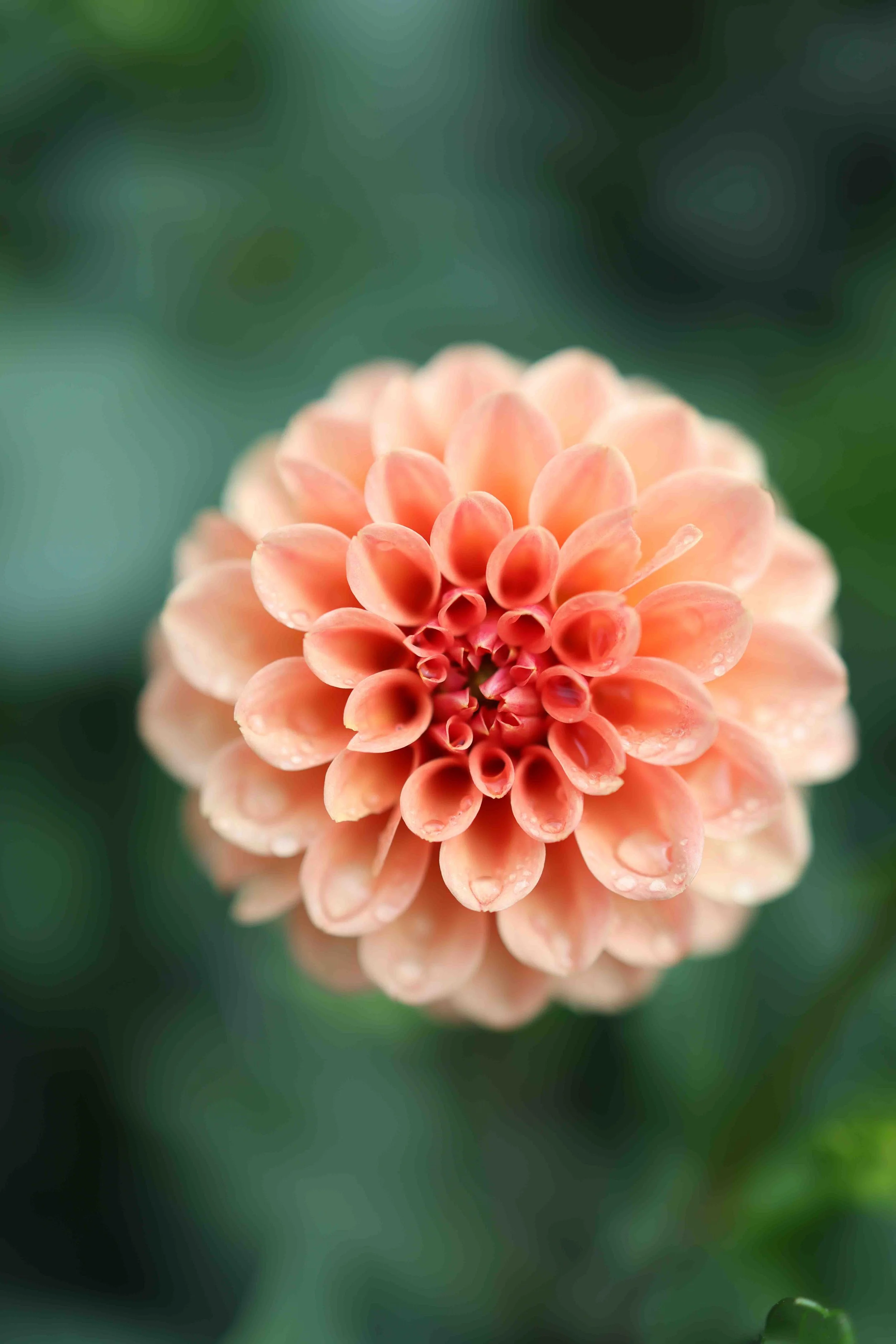
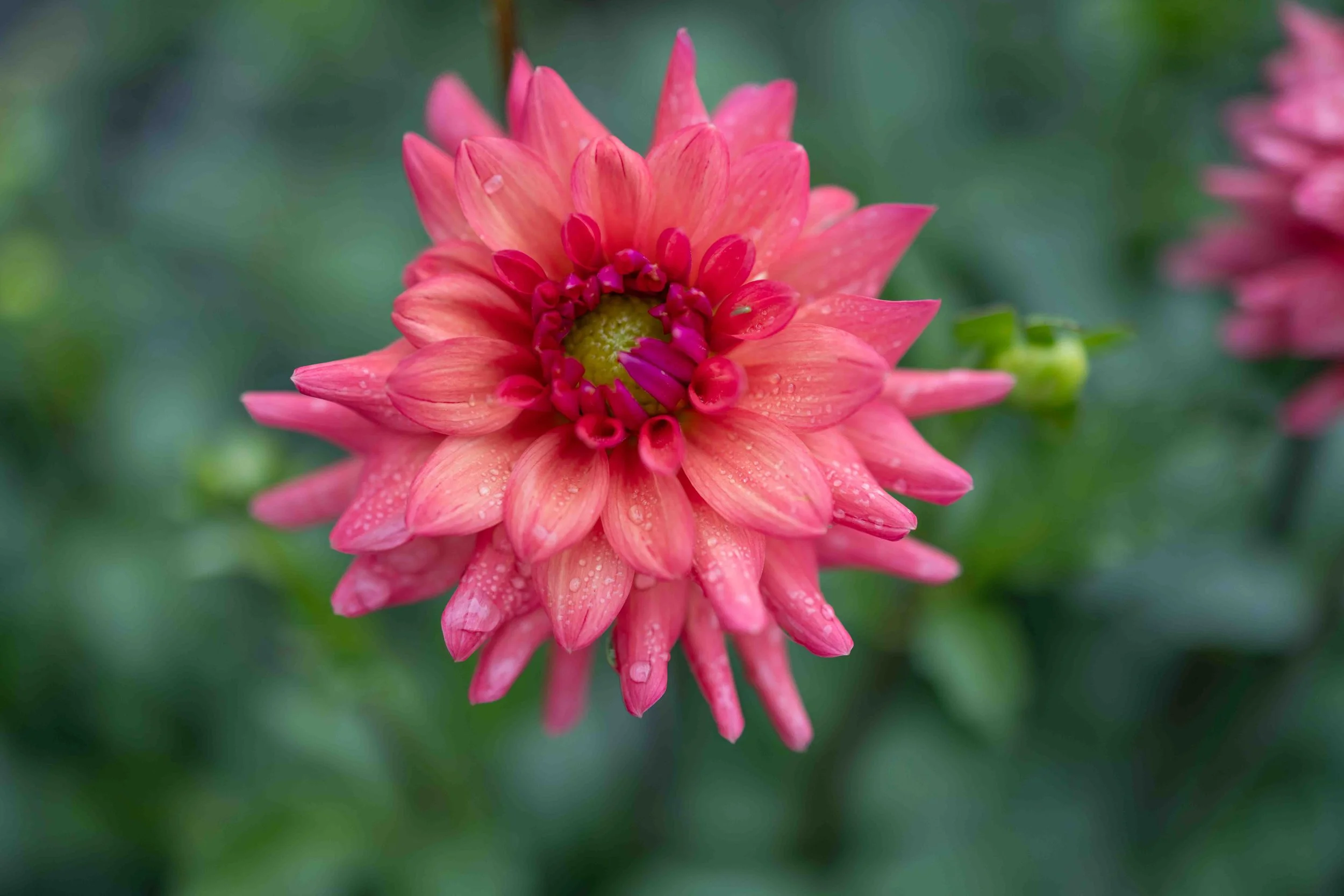
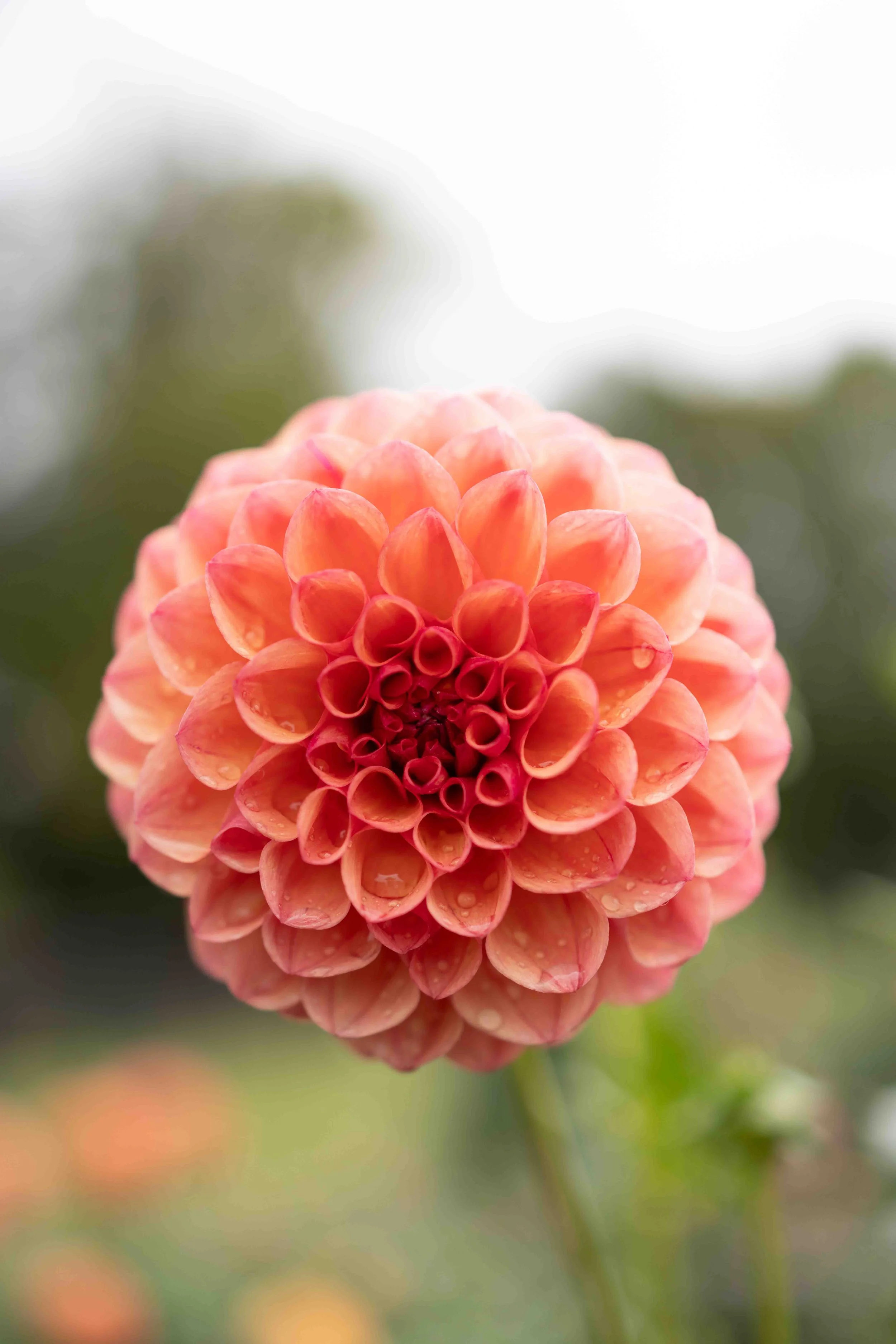

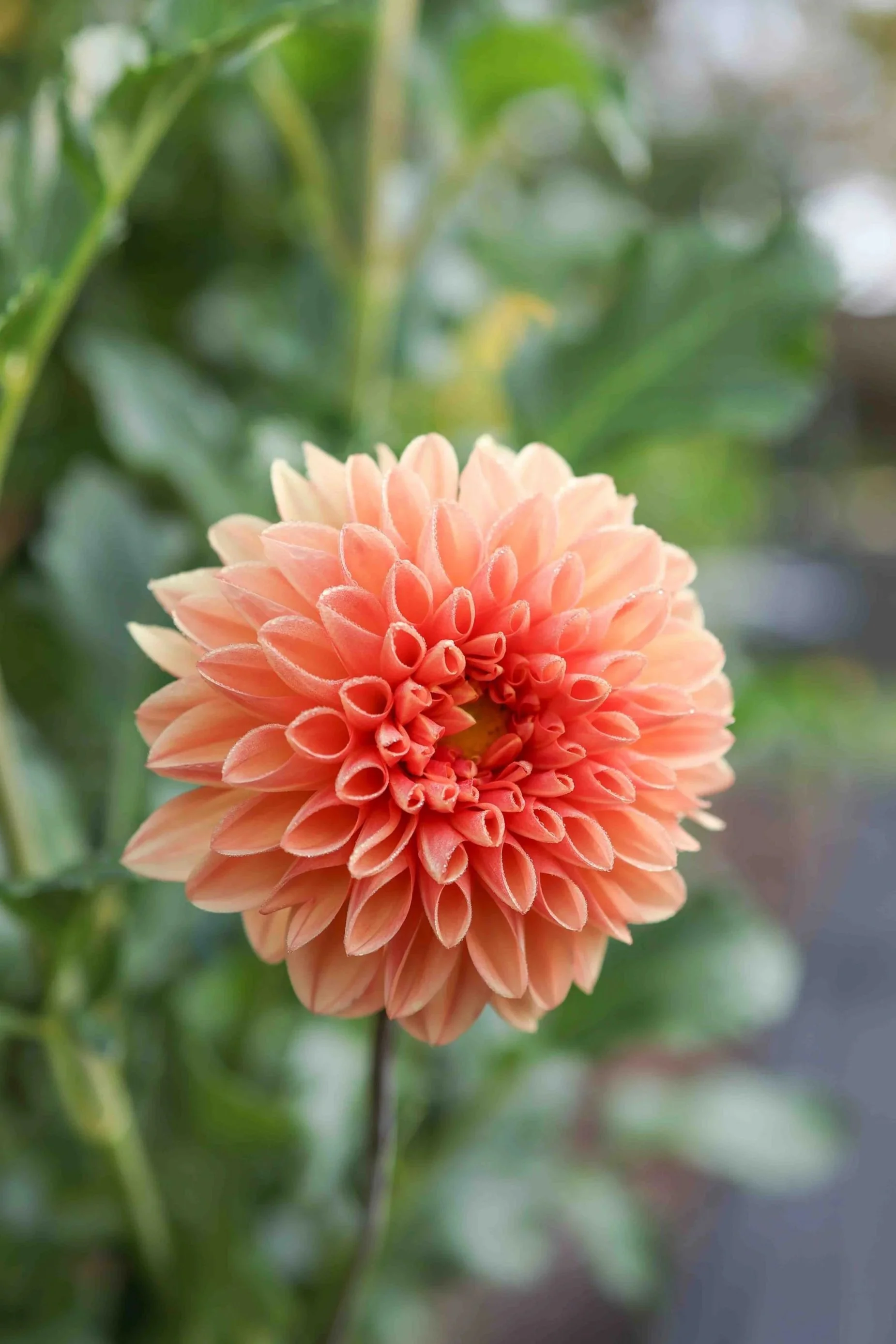
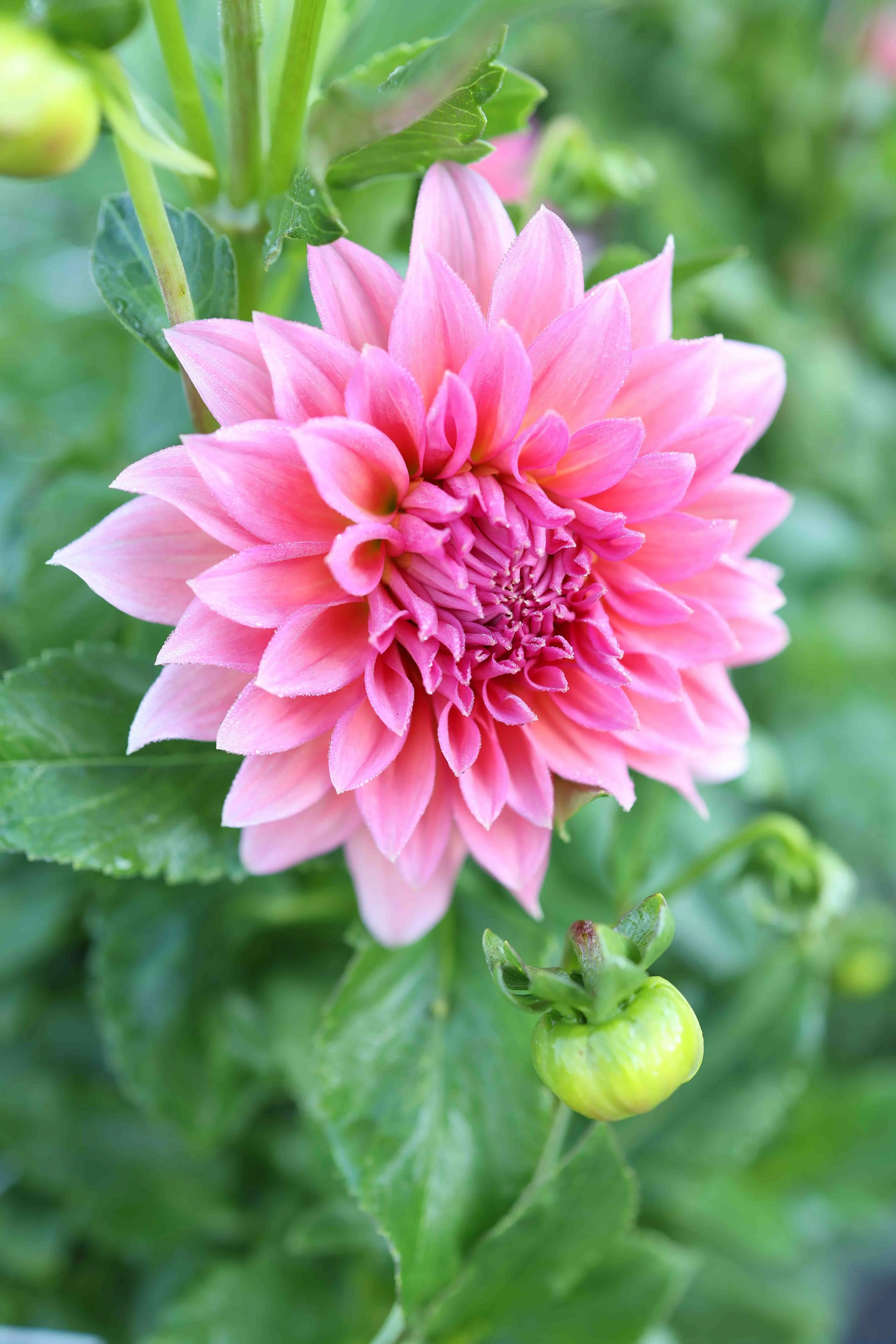
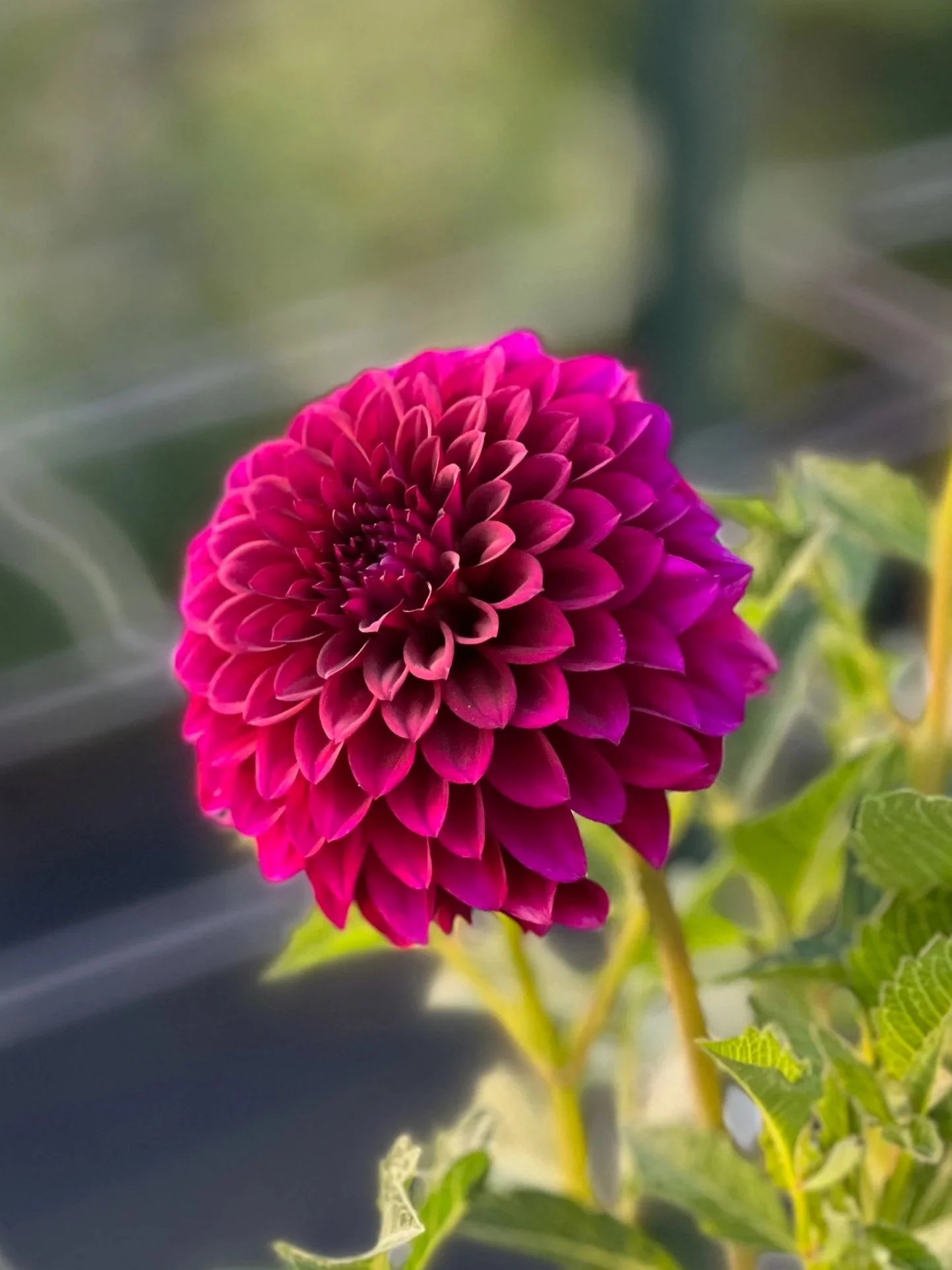
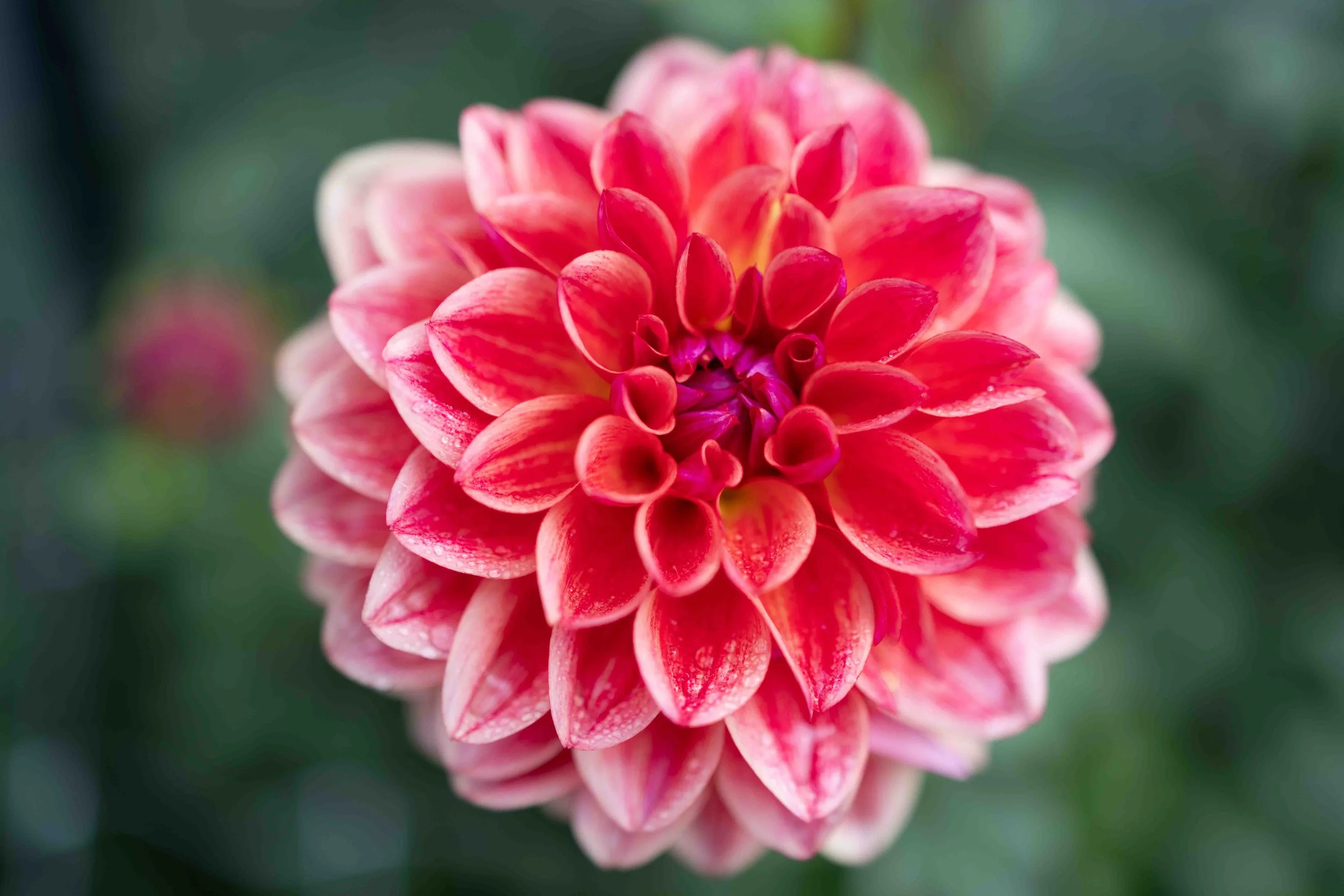
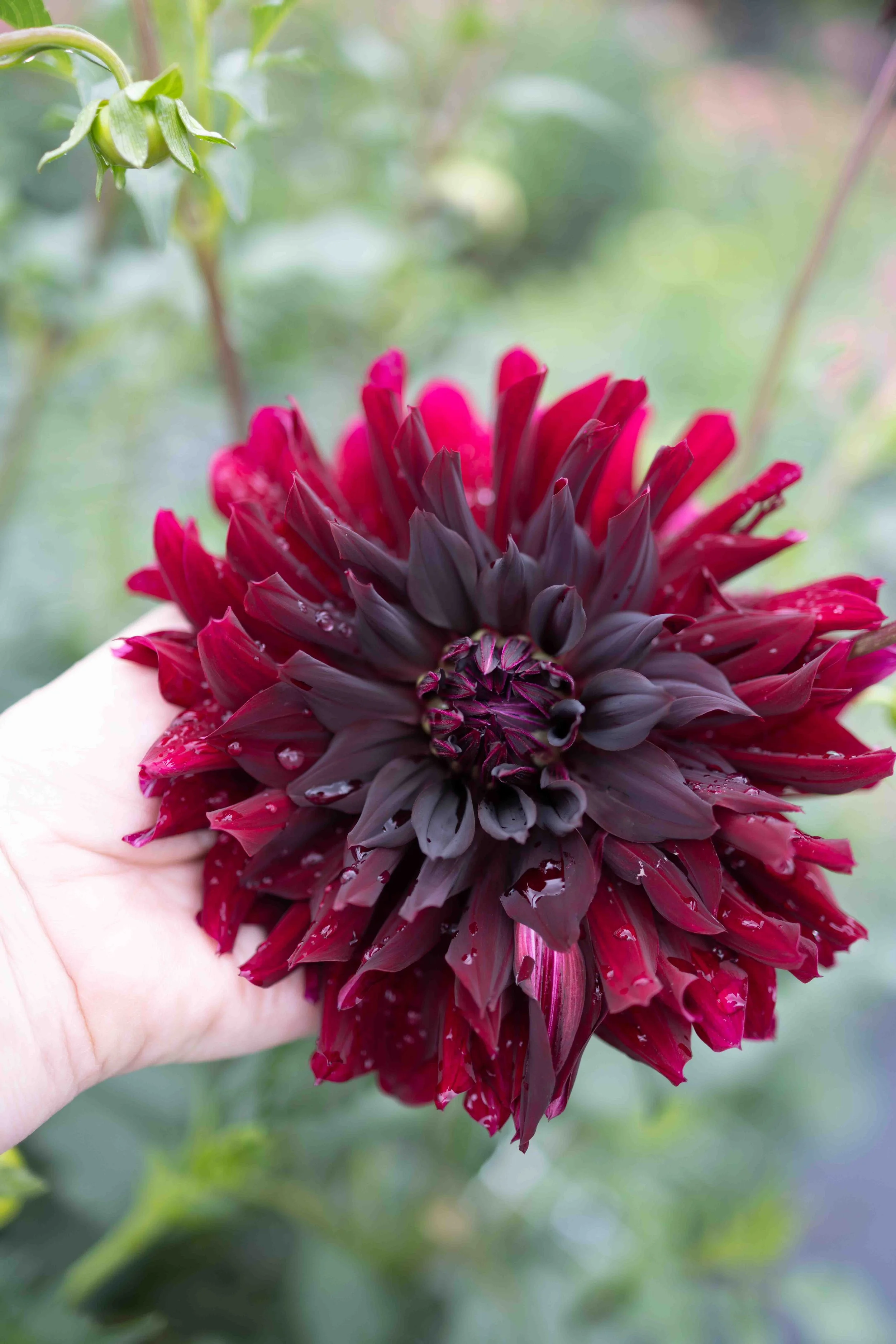
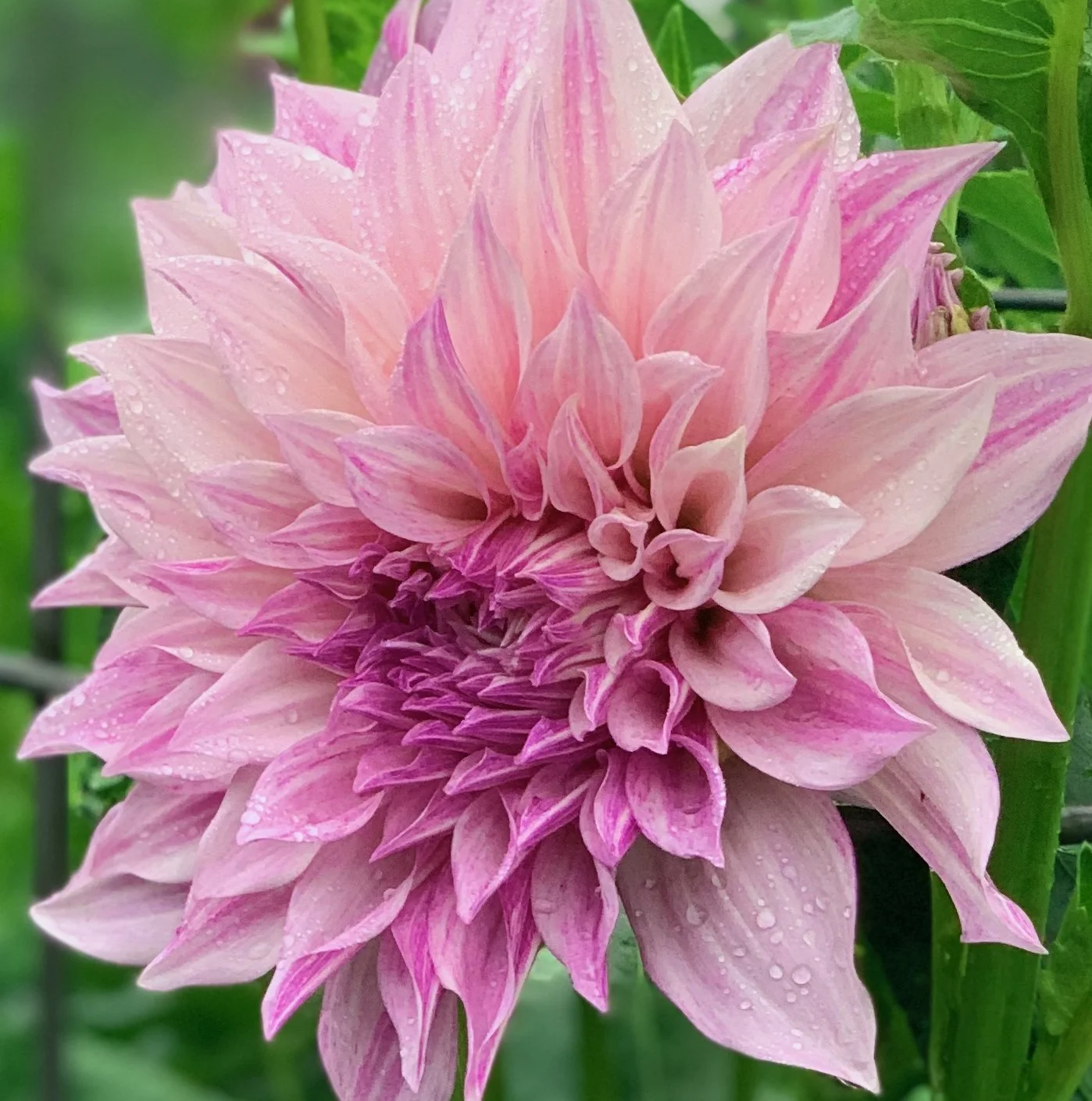
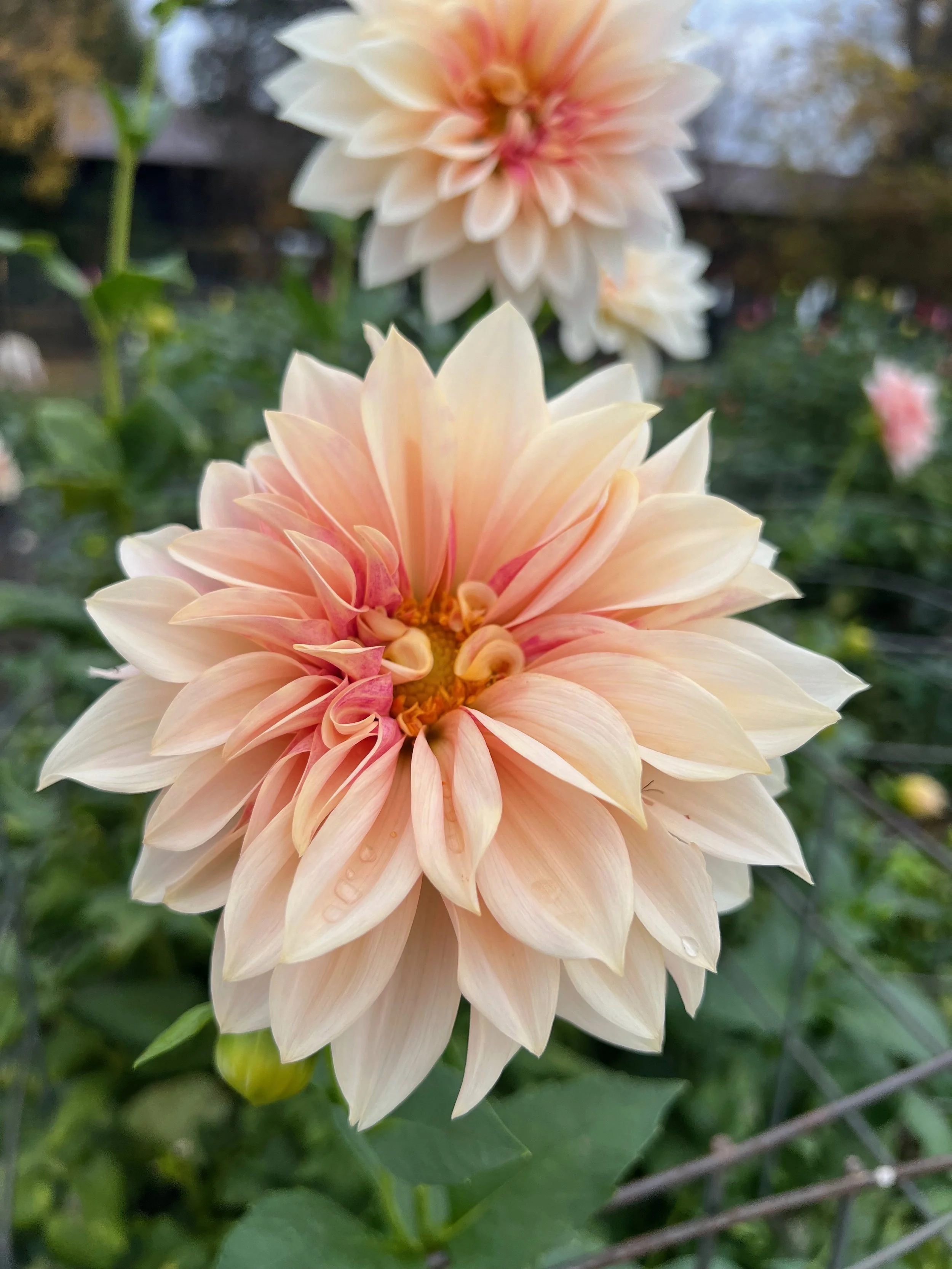
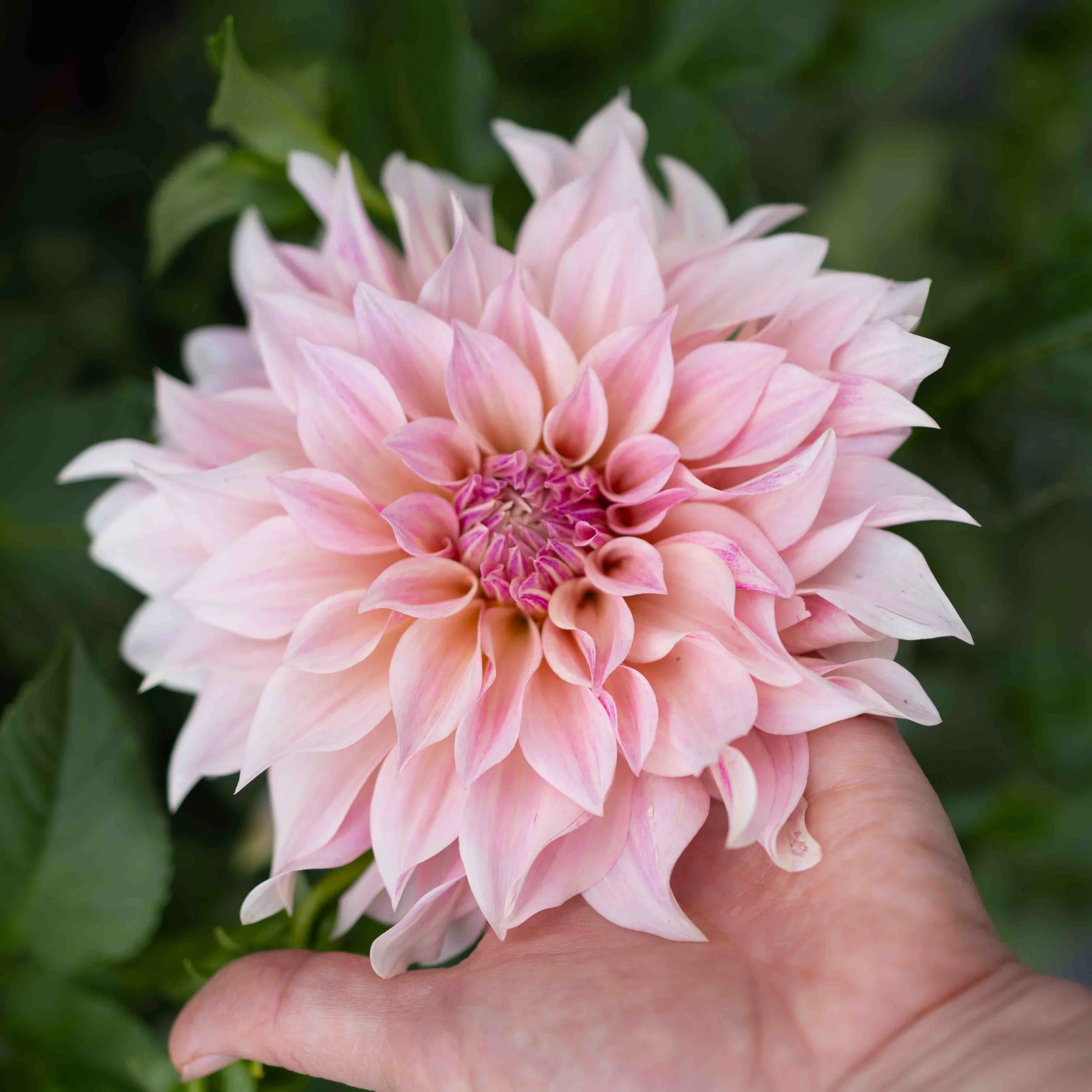
We give you the scoop on all the dahlias pictured here in the Freebie above! Want to check out more freebies? Just head to our Freebies page and download them all in a matter of minutes!
Bringing It All Together: Plant with Purpose
The beauty of dahlias is that there’s a variety—and a business case—for every kind of flower farm. But that flexibility can be a double-edged sword. The same dahlia that’s perfect for a wedding arbor might flop in a mixed market bouquet, and the one that draws a crowd at a pick-your-own might never make it into a florist’s cooler.
Getting it right isn’t about memorizing names—it’s about matching your flowers to your sales model. Once you know where and how you sell, decisions about what to plant, how many, and why start to feel clear and strategic instead of overwhelming.
Whether you’re focused on mixed bouquets, weddings, or on-farm experiences, clarity about your revenue streams turns planting decisions into profit decisions.
That’s exactly what the Revenue Streams Compass™ was designed to help you do.
If you’re not sure which sales channels best fit your farm, start with the free Field Factors Assessment. It’ll help you discover your top five revenue streams—so you can plant with confidence, grow the right crops, and stop second-guessing next season’s decisions.
➡️ Take the FREE assessment and find your farm’s fit. You’ll get your Top 5 results right away — no email required.

The Revenue Streams Compass™
Learn how to align your vision, strengths, resources, and revenue goals with one—or multiple—revenue streams to build a flower business that’s sustainable, profitable, and joyful.