

Mother’s Day Isn’t Just Another Sales Weekend
For a long time, I resisted charging more for Mother’s Day.
It felt uncomfortable. Like I was somehow taking advantage of the moment. Like I should keep pricing consistent with the rest of the season, even though I knew the demand was different.
But over time, I realized something that completely changed how I think about Mother’s Day: it’s not just another sales weekend. It’s a completely different kind of event.
Mother’s Day is a high-stakes, emotionally charged, time-compressed week that puts real pressure on your systems, your time, and your energy. Demand peaks all at once, decisions stack quickly, and the margin for error is much smaller than usual. The work is different. The pressure is different. The expectations are different.
And once I understood that—and made a small tweak to my offerings—I lost the guilt about charging more for Mother’s Day. Not because I decided to charge more arbitrarily, but because I finally accounted for what the week actually requires.
But this isn’t a blog about pricing. It’s about what it takes to not waste the biggest sales opportunity of your season.
Because Mother’s Day is not a test of talent. It is a test of structure.




Our Mother’s Day offerings are curated to work together, maximize what’s in the field, and sell out. It took years to get here—and we’re ready to share it.
Common Traps & Assumptions
Mother’s Day rarely feels chaotic because of one big mistake. More often, it’s a handful of decisions that were left open too long and become difficult to resolve once the week arrives.
For a long time, mine showed up as hesitation. I used to delay marketing because I was afraid to oversell what the fields could produce. I wanted a clearer sense of what would actually be blooming before committing to specific offerings.
What I didn’t realize was that I was also giving up one of the most powerful levers I had.
Without pre-orders, I had very little visibility into demand. I wasn’t shaping sales—I was reacting to them. Which meant I was trying to match production to whatever showed up in real time, often with very little margin for error.
This became even clearer one Mother’s Day at market. For most of the season, our customers are overwhelmingly women, but that weekend it shifted to something much closer to 50/50 men and women. A lot of those purchases were gifts, which meant we were suddenly reaching people who had never encountered our farm before. Many of those recipients came back later as customers, which made it obvious that Mother’s Day isn’t just a revenue moment—it’s one of the only times your marketing needs to reach a completely different audience.
That same mindset showed up in other ways too. Keeping options open. Assuming there was still time. Telling myself certain details could be figured out later.
“There is plenty of time; my season has barely even begun.”
“That’s just a detail I can decide when the time comes.”
“I’ll keep orders open a little longer and see how it goes.”
“I know what sells in my current sales channel. I’ll just offer the same thing.”
Sound familiar?
Mother’s Day has a way of collapsing all of those “later” decisions into the same moment.
Here's some common patterns we tend to find ourselves trapped in:





(Not) Planning For Mother’s Day Success
In the very first Mother’s Day of Sweet Piedmont flowers, I didn’t take any pre-orders. I harvested everything I could, made as many bouquets as I could, and brought everything to market, hoping it would sell. I didn’t have a system for building bouquets yet—this was well before the Bouquet Blueprint™—so I was working off instinct and adjustment, trying to stretch what I had harvested as far as possible.
Which meant I was constantly taking bouquets apart and rebuilding them, trying to make better use of the stems in front of me. Without a plan, without a structure, I was guessing. And that guessing turned bouquet-making into an all-night, deeply frustrating process that took far more time than it should have, with no clear sense that I was actually getting it right.

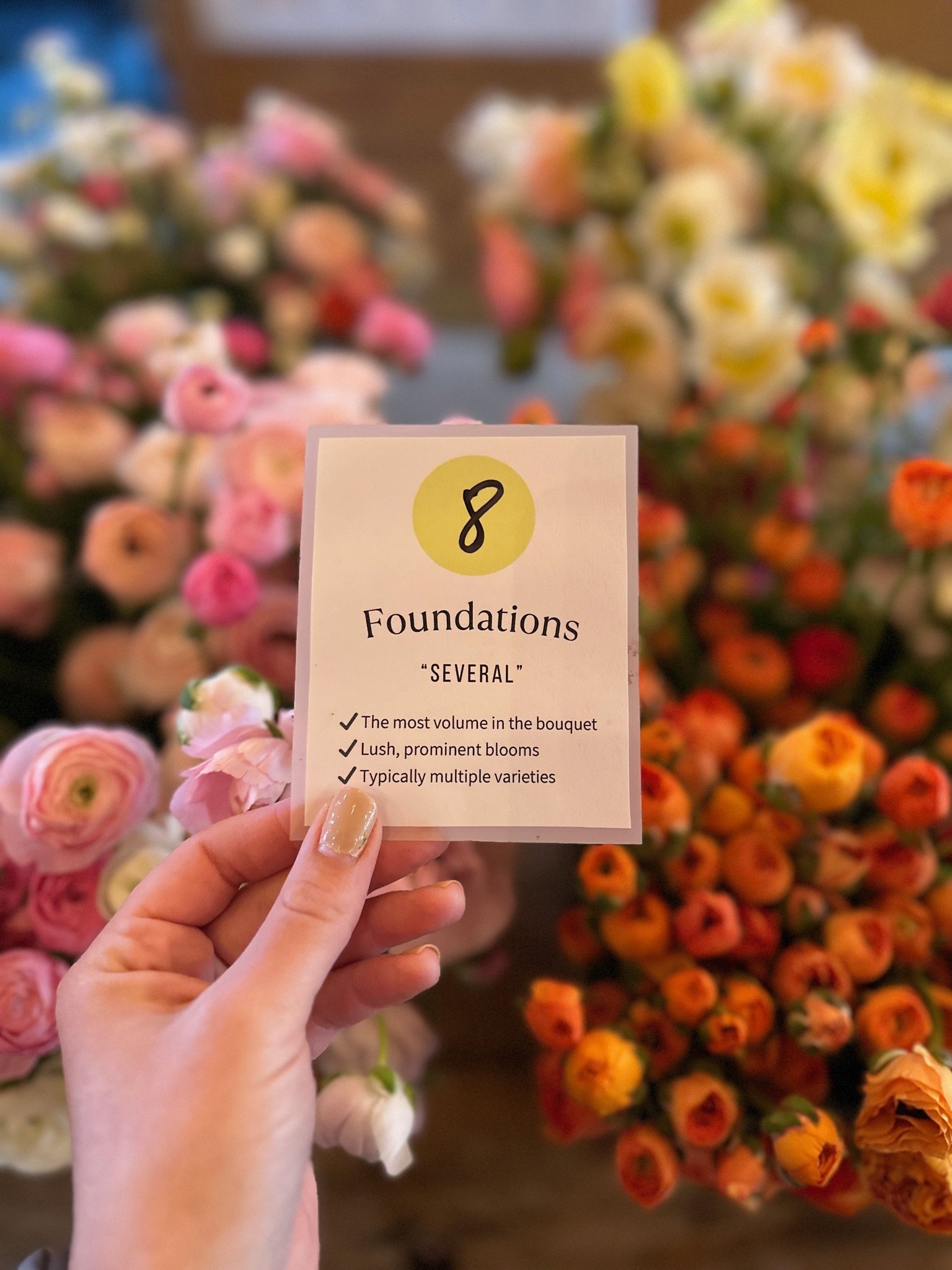

In the early days (first picture), Mother’s Day bouquets just started with a mass of flowers waiting to be turned into offerings—often an all-night affair. More recently (second and third photos) systems exist at every stage of the process, providing structure, organization…and sanity.
There was no real marketing beyond an Instagram post or two, either—I was too busy harvesting and making bouquets. So by the time market day arrived, many customers had already placed orders elsewhere. I sold mostly to the people who needed something last-minute, and I didn’t sell out of what I brought, which was deeply disappointing, given all the time I’d put into the bouquets. It was a huge missed opportunity.
In other years, the opposite problem showed up. We would sell out within the first hour or so of the Saturday market, and I’d wish we harvested far more. One year, I came home and harvested everything I could get my hands on—in the rain—so I’d have bouquets to sell on Sunday. I pulled another all-nighter, only to find out that the demand on Sunday at market was far lower than Saturday (pretty much just the people who forgot it was Mother’s Day were buying on Sunday). That wasn’t success—it was guessing.
That pattern repeated itself in different ways over the years. Some Mother’s Days went smoothly. Others showed very clearly where things break when volume increases and decisions start stacking.
What changed everything wasn’t working harder or offering more. It was building clearer systems and making fewer, better decisions earlier in the process.
Over time, that started to take shape in more concrete ways:
building a simple, properly-priced product suite
marketing offerings clearly and early
managing preorders instead of reacting to demand
tracking harvest potential early and refining it as the week approaches
designing in a way that protects both time and margins
executing pickup and delivery in a structured way
None of these are particularly complicated on their own. What makes them difficult is trying to figure them out too late.
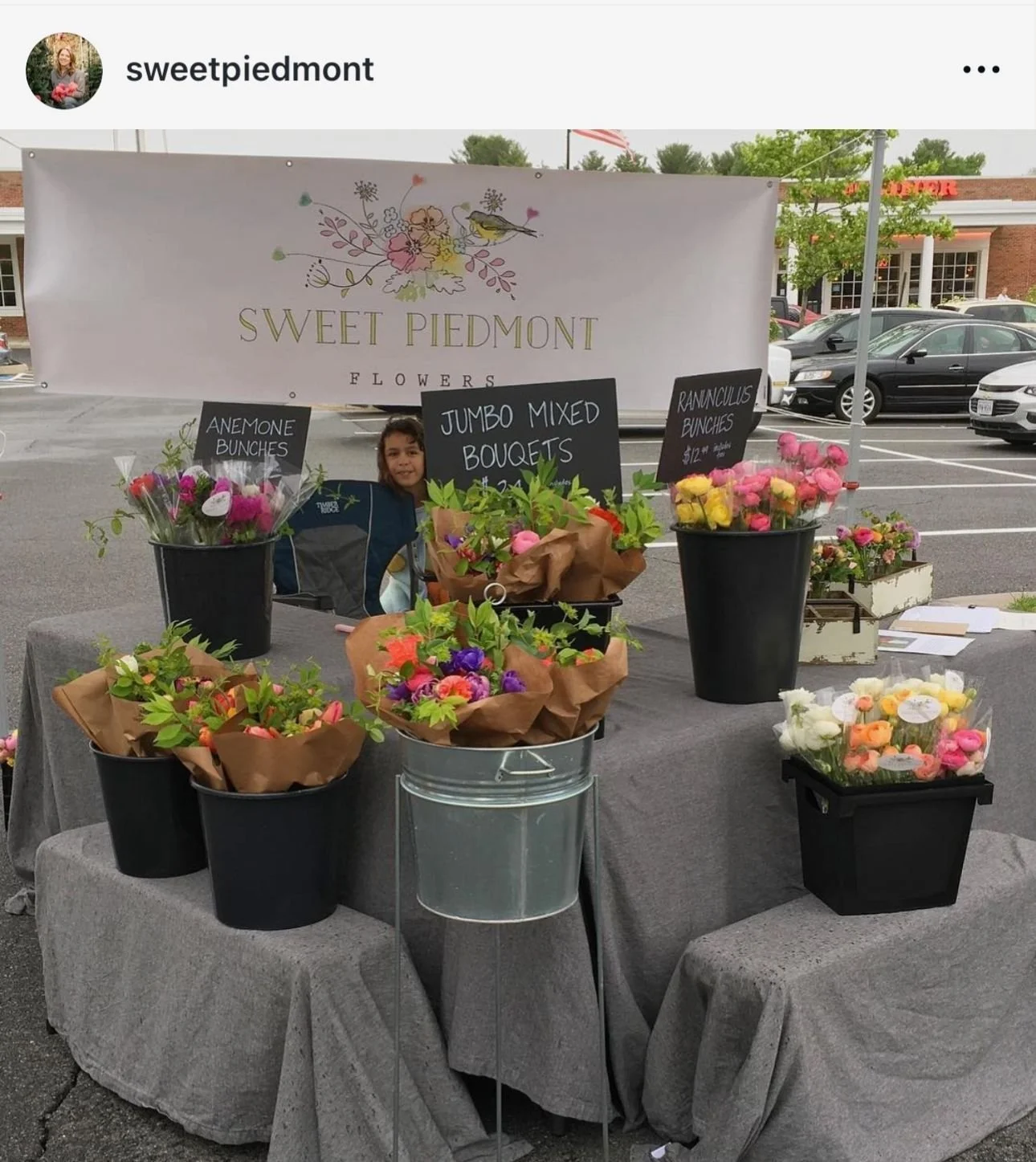


Marketing is a game-changer for driving sales, but without a game plan, you will run out of time to do it. My very first Mother’s Day (first picture) I did zero marketing—just a “I’m here at market"!” Instagram post. Eventually I started posting ahead of the holiday (second picture). But now, with systems and structure in place, our marketing is comprehensive and extremely effective. Picture three shows just one example.
The Mother’s Day Sales Environment
Mother’s Day doesn’t behave like the rest of the season.
Most of the time, your revenue streams have some level of predictability. You can anticipate when customers will buy, roughly how much they’ll spend, and how orders will flow through your week. You develop rhythms around marketing, harvest, design, and fulfillment that support that.
Mother’s Day compresses all of that into a very small window.
You’re dealing with a sharp spike in volume, a compressed timeline, customers buying under pressure (often at the last minute), and fulfillment, communication, and delivery all happening at once.
Systems that work well during a normal week can strain—or collapse—under those conditions.
The same thing happens with fulfillment. It’s tempting to offer every possible option—farm pickup, market pickup, different days, delivery across multiple windows—but each additional choice adds complexity.
I learned this the hard way. Keeping track of who was picking up where and when quickly became more time-consuming than actually making the bouquets. And that kind of complexity shows up in production too—one year we used all of our pink, peach, and coral ranunculus in mixed bouquets and arrangements, which left mostly yellow stems for ranunculus bunches. That wasn’t a growing issue. It was a planning issue.
And when that happens, it doesn’t feel like a systems issue. It feels like you’re behind, or disorganized, or not keeping up.
In reality, it’s just that the week is exposing the structure (or lack thereof) underneath everything.
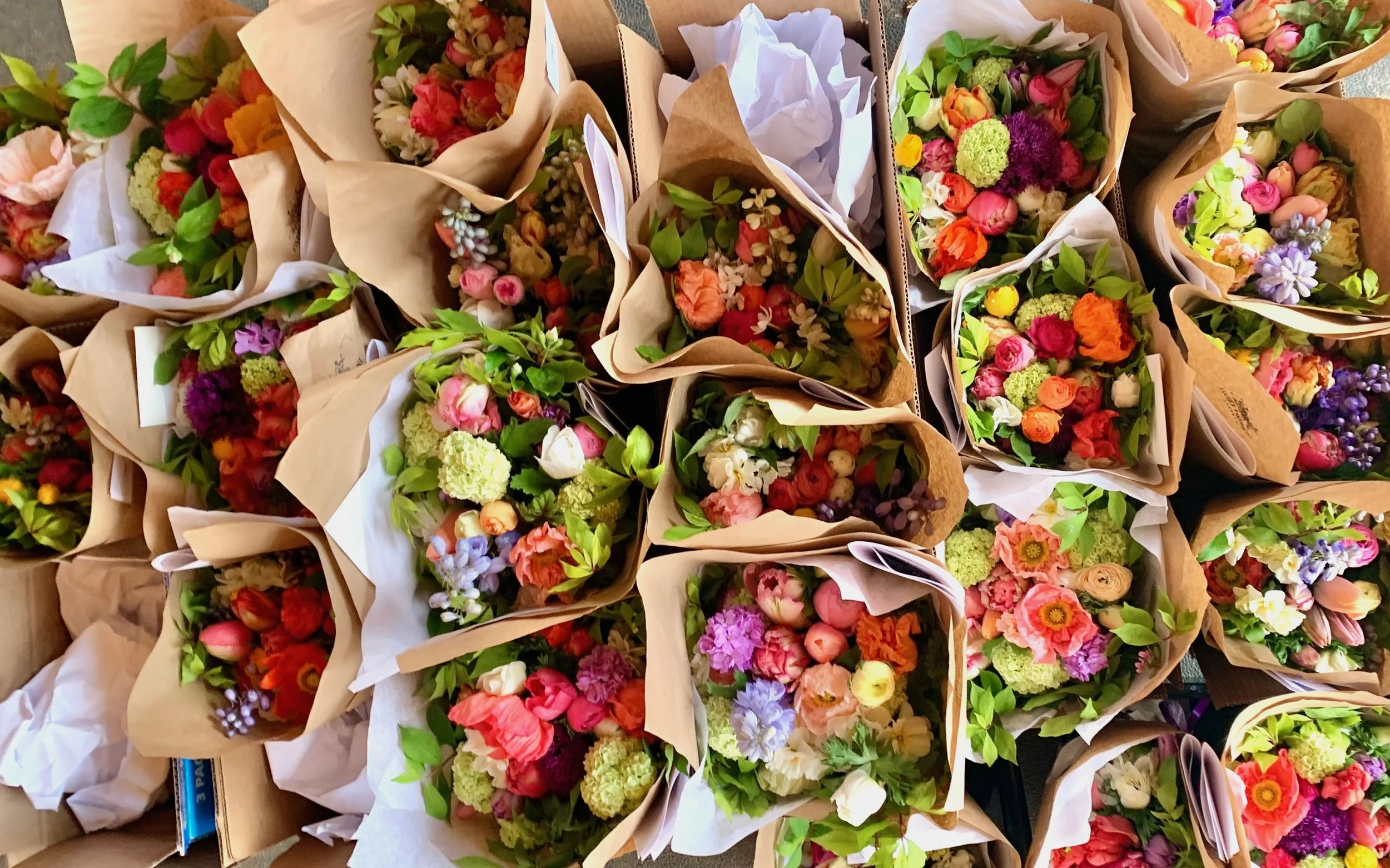

Same holiday. Very different experience. Even with just a handful of bouquets (first photo), Mother’s Day used to feel overwhelming. Now, with the right systems in place, we can handle hundreds of orders with ease (second photo)
This Is Where It All Adds Up
By the time you reach Mother’s Day, the question isn’t whether you can grow beautiful flowers or design compelling products. It’s whether your systems are strong enough to support what that week demands.
Structure is what determines whether your work translates into a successful outcome. It’s what allows you to capture demand, produce efficiently, fulfill accurately, and protect your margins instead of eroding them under pressure.
And ultimately, it’s what allows Mother’s Day to function as that “Black Friday” moment for your farm—the point in the season where all of that early investment can finally start to pay off.
If You Want This Year to Feel Different
If you want this year to feel different, the goal is not to work harder or offer more. It’s to make fewer decisions during the week itself by making more of them in advance—and making them in a way that actually fits together.
That’s the piece that took me the longest to figure out.
Not just what to do, but how all of the decisions connect—how your product suite affects your harvest, how your pricing affects your margins and workload, how your sales system affects your ability to stay organized, and how your marketing affects whether you’re reacting to demand or shaping it.
That’s exactly what the Mother’s Day Success Pack is designed to do.
It walks through those decisions in the order they actually matter, with tools to help you define your capacity, build a product suite that fits your farm, structure your sales system, and manage the week without constantly second-guessing what you should be doing next.
So when orders start coming in, you’re not trying to figure everything out in real time—you’re executing a plan that already works.
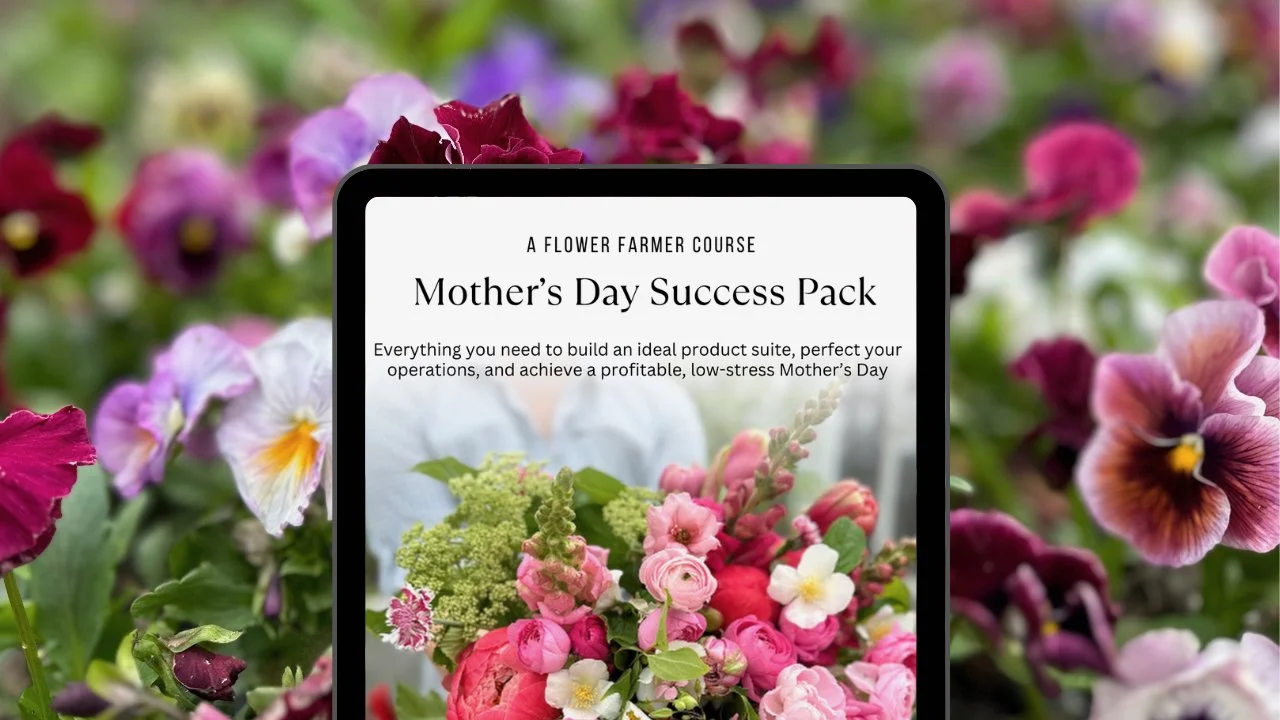
Mother’s Day Success Pack
Turn Mother’s Day into a structured, profitable, and manageable sales week instead of a stressful scramble.
💐 Build and price a product suite that actually sells
📣 Capture demand and sell with confidence
📋 Plan and execute fulfillment solo or with your team
✨ And much, much more…